Logo
  • About Us
  • Trading
    • Account Types
    • PAMM Accounts
    • Pairs Stocks
  • Platforms
    • MetaTrader 5
  • IB Program
  • Support
  • Sign Up
  • Log In
funded account
  • Stephanie Lott
  • April 2, 2026
  • No Comments

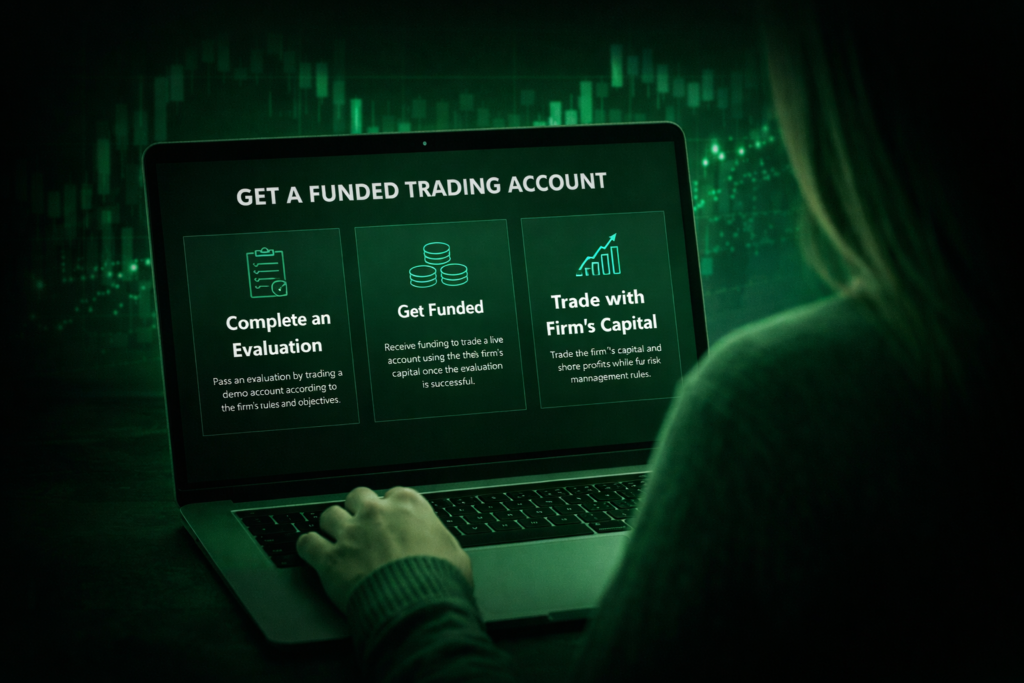
A funded trading account has become a big topic in the trading space. Many traders are interested in it because it offers access to capital without requiring a large personal trading balance from day one.

That idea is powerful.

Instead of putting a large amount of your own money into the market, you try to qualify for a funded account. If you pass the required evaluation and follow the rules, you may get access to a larger account and earn a share of the profits.

It sounds like a great opportunity, and in some cases it is.

Still, a funded trading account is often misunderstood.

It is not free money. It is not an easy path to instant income. It is not meant for careless traders who want to take random trades and hope for the best. A funded account is usually built around rules, discipline, and risk management.

That means traders need to understand exactly what they are getting into.

In this article, we will explain what a funded trading account is, how it works, what the benefits and drawbacks are, and who it is truly best suited for.

funded account

What Is a Funded Trading Account?

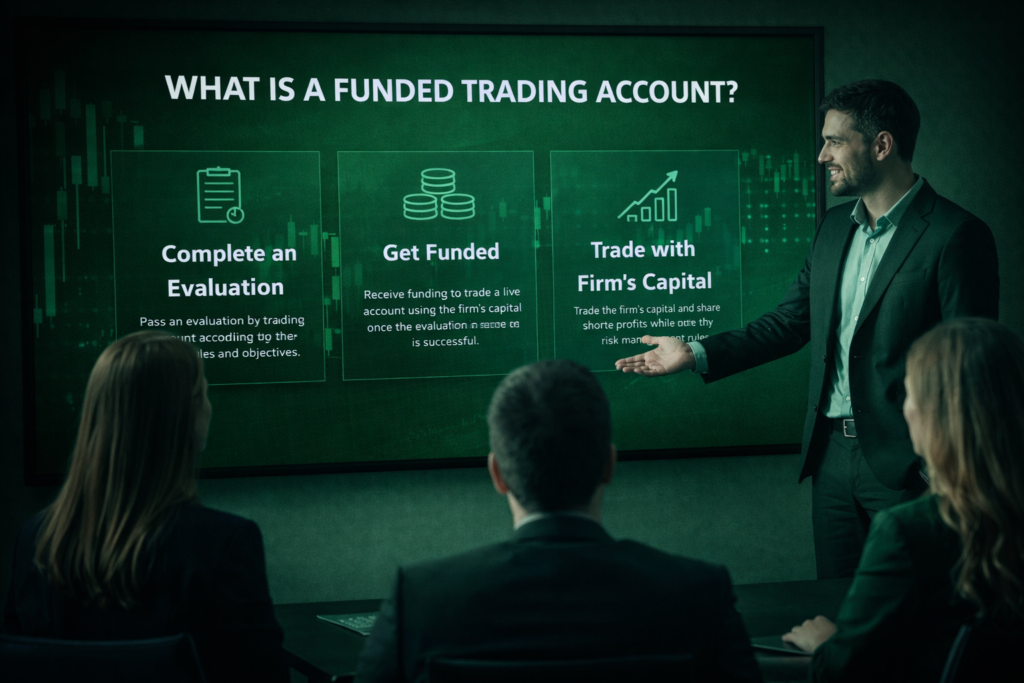
A funded trading account is an account provided by a prop firm or funded trading company that allows a trader to trade with company-backed capital after meeting certain performance requirements.

In simple terms, the firm wants proof that the trader can handle risk and follow a plan. Once that proof is shown, the trader may gain access to a larger account than they would normally trade with their own money.

The trader then works within the company’s rules and receives a percentage of profits if performance is strong.

A funded trading account is attractive because it lowers one big barrier in trading: capital.

Many traders are interested in the markets but do not have the budget to fund a large personal account. A funded account can provide another route.

Still, access to capital comes with strict conditions.

Most funded trading programs include rules such as:

  • daily loss limits
  • overall drawdown limits
  • profit targets
  • minimum trading day requirements
  • rules around major news events
  • weekend holding restrictions
  • consistency requirements
  • position size limits

These rules are there to protect the firm and to identify disciplined traders.

How Does a Funded Trading Account Work?

Although each company has its own model, the general process is usually similar.

Step one: evaluation

The trader begins with an evaluation stage. This stage tests whether the trader can reach a required profit target while staying inside the firm’s risk rules.

The trader may need to:

  • hit a target return
  • avoid crossing the daily drawdown limit
  • stay within the maximum total drawdown
  • trade for a minimum number of days

This phase is meant to show consistency, not just lucky timing.

Step two: verification

Some firms use a second stage after the first challenge. This is often a lighter phase, but the trader still has to follow the rules.

The goal is to confirm that the first result can be repeated.

Step three: funded account access

After passing the required stages, the trader receives access to the funded trading account.

At this point, the trader can continue trading under the firm’s rules and become eligible for payouts.

Step four: profit split

When the trader generates profits, the gains are typically split between the trader and the firm.

This is known as the profit split.

The percentage varies by provider, but the general idea is simple. The trader earns a share of the profits for performing well while respecting the account terms.

Why Traders Are Interested in Funded Trading Accounts

There are several reasons why a funded trading account has become so popular.

First, it gives traders access to more capital.

Second, it creates a clear framework for risk.

Third, it offers a way to earn based on trading performance instead of depending only on personal account size.

This can be especially appealing to traders who believe they have skill but limited resources.

Some of the main reasons traders like this model include:

  • larger trading capital
  • lower personal capital requirement
  • structured rules
  • performance-based payouts
  • the ability to scale without fully self-funding

Still, none of these benefits remove the need for discipline.

What Markets Are Usually Available?

The answer depends on the provider, but funded trading accounts are commonly available for markets such as:

  • forex
  • indices
  • commodities
  • crypto
  • stocks
  • futures

Not every firm offers the same range of products. Some are focused mostly on forex and CFDs. Others specialize in futures.

This matters because not every strategy works across all asset classes.

A trader should always know what products are available before signing up for an evaluation.

The Benefits of a Funded Trading Account

A funded trading account can offer real value to the right person.

Access to capital

This is the biggest advantage. A trader may get the chance to trade a larger account than they could personally fund.

Reduced pressure on personal funds

Instead of risking a large personal deposit, the trader works inside a challenge-based model.

A stronger structure

The rules can help remove some emotional decision-making. They force the trader to respect limits and stay focused.

A chance to earn through performance

If the trader performs well, they may earn payouts without needing to build a big account entirely on their own.

A useful learning process

Even if a trader does not pass right away, the process can expose weaknesses in execution, patience, and self-control.

The Drawbacks of a Funded Trading Account

The funded model also has limits and risks. These are important to understand.

Tight rules

Some strategies may struggle under strict drawdown conditions, even if they are profitable over time.

Psychological pressure

The challenge format can create stress. Some traders stop following their plan because they become obsessed with the target.

Challenge fees

Entry fees may not seem large at first, but repeated failed attempts can become costly.

Provider quality varies

Not all funded trading firms are equally transparent or reliable. Terms, support, and payout systems can differ a lot.

Bad habits still show up

A funded account does not fix emotional trading. It often exposes it much faster.

funded account
START A DEMO ACCOUNT WITH INVIDIATRADE HERE

Who Is a Funded Trading Account Best For?

A funded trading account is usually best for traders who already have some level of skill and self-control.

It can be a strong fit for:

  • traders with a tested strategy
  • traders who manage risk carefully
  • traders with limited personal capital
  • patient traders focused on consistency
  • people who work well inside clear rules

It is usually not the right fit for:

  • complete beginners
  • traders looking for quick income
  • people who overtrade
  • traders who panic after losses
  • anyone who treats trading like entertainment

This is important because funded trading is less about excitement and more about control.

Common Reasons Traders Fail

Many traders lose challenges or funded accounts for very similar reasons.

Oversizing trades

Trying to reach the profit target too fast usually leads to excessive risk.

Forcing setups

Impatience causes traders to enter mediocre trades instead of waiting for quality opportunities.

Misunderstanding the rules

Some traders do not fully understand how drawdown, daily limits, or consistency rules are applied.

Revenge trading

A loss leads to another rushed trade, and then another, until the account is in trouble.

Changing strategy mid-process

A trader gets nervous after a few losing trades and suddenly abandons the original plan.

How to Prepare Before Starting

Before attempting a funded trading account, it helps to prepare properly.

You should know:

  • your exact strategy
  • your risk per trade
  • your preferred market
  • your trade entry rules
  • your trade exit rules
  • your daily risk limit

You should also review the provider’s terms carefully.

Check things such as:

  • payout schedule
  • profit split structure
  • account breach rules
  • inactivity policies
  • news trading restrictions
  • weekend holding rules

Preparation can make a major difference.

Why Discipline Matters More Than Strategy

Many people think success in funded trading is mostly about having the perfect strategy.

That is not really true.

A trader with a basic but reliable strategy can often do well if they:

  • manage risk correctly
  • stay patient
  • avoid emotional decisions
  • respect the rules
  • think long term

At the same time, a trader with a clever strategy can still fail if they cannot stay disciplined.

That is why discipline is often the real edge in a funded trading account.

The challenge does not only test your entries. It tests your behavior.

Can you stop after hitting your loss limit?
Can you avoid chasing the market?
Can you accept a slow week?
Can you protect the account instead of forcing results?

These questions matter more than many traders realize.

Are Funded Trading Accounts Worth It?

For the right trader, they can be worth it.

A funded trading account can create opportunity for someone who already has a trading process, understands risk, and wants access to more capital.

For the wrong trader, it can become a cycle of failed challenges and wasted money.

That is why the model should be approached with honesty.

A funded trading account may be worth it if you:

  • already have a strategy
  • understand drawdown and risk
  • can stay calm under pressure
  • respect rules
  • want a structured environment

It may not be worth it if you are still looking for quick wins and easy money.

START A DEMO ACCOUNT WITH INVIDIATRADE HERE

Final Thoughts

A funded trading account is not just about getting access to a bigger balance. It is really about proving that you can manage risk, follow rules, and trade with consistency.

Yes, it can offer a path to larger capital.
Yes, it can provide structure.
Yes, it can reward performance.

But it also requires patience, discipline, and realistic expectations.

That is why a funded trading account is really for traders who are serious about process. It is not for traders who want shortcuts.

If you already have a plan, can control your emotions, and understand that protecting the account comes first, this model may be worth exploring.

If not, the smarter move may be to build stronger habits before taking on the challenge.

Because in the end, the biggest factor is not the account size.

It is the trader behind it.

Disclaimer: This article is for educational and informational purposes only. It does not constitute financial advice, investment advice, or trading advice. Trading involves risk, and losses can occur. Funded trading programs have different rules, fees, restrictions, and payout terms depending on the provider. Always do your own research and review the terms carefully before taking part in any trading activity.

funded account

What Is a Funded Trading Account? How It Works

April 2, 2026 No Comments

A funded trading account has become a big topic in the trading space. Many traders are interested in it because it offers access to capital

Read More »
trading hours

Global Trading Hours Explained: When Markets Are Most Active and Why It Matters

March 24, 2026 No Comments

Financial markets operate across multiple time zones. As a result, trading takes place almost continuously throughout the week. While this constant access creates flexibility, it

Read More »
trading explained

CFDs Trading Explained: How Contracts for Difference Work, Risks Included

March 24, 2026 No Comments

Many people enter the markets looking for clarity. They hear about forex, stocks, indices, and commodities, but they are still unsure how trading actually works.

Read More »
trading tools

Essential Trading Tools Every Serious Trader Uses (And How to Choose the Right Ones)

February 25, 2026 No Comments

A practical overview of how a forex demo account works and what traders should know before getting started.

Read More »
trading news

Trading News That Actually Matters: How to Filter Market Noise From Real Opportunity

February 16, 2026 No Comments

Most traders do not lose because they are uninformed. They lose because they are overloaded. Trading news is constant. You can refresh your feed every

Read More »
Trading Analysis

Trading Analysis Explained: How Professionals Read Markets Before Placing a Trade

February 11, 2026 No Comments

Disclaimer (InvidiaTrade): This article is for educational purposes only and does not provide financial, investment, or trading advice. Trading carries risk, and you may lose

Read More »
Post Tags :
  • automated eas
  • best trading platform
  • blog.invidiatrade.com
  • broker
  • demo account
  • Expert Advisors
  • forex broker
  • Forex Pairs
  • forex trading
  • metatrader 5
  • mt4
  • mt5
  • trading gold
  • trading platform
Articles
img
What Is a Funded Trading Account?
April 2, 2026
img
Global Trading Hours Explained: When Markets
March 24, 2026
img
CFDs Trading Explained: How Contracts for
March 24, 2026
img
Essential Trading Tools Every Serious Trader
February 25, 2026
img
Trading News That Actually Matters: How
February 16, 2026
Categories
  • Beginner Basics (45)
  • Case Studies & Backtests (34)
  • Central Bank Updates (4)
  • Commodities Outlook (6)
  • Crypto (3)
  • Currency Strength & Correlation (37)
  • Dividend stocks (3)
  • EA & Automation (25)
  • EA Case Studies (16)
  • Economic Reports (6)
  • European & Asian Markets (6)
  • Forex (4)
  • Forex Strategies (40)
  • Forex Trading (84)
  • Fundamental Analysis (18)
  • Geopolitical Events (1)
  • Gold & Commodities (21)
  • Indicators & Charting (6)
  • Indices & Stocks (23)
  • IPO stocks (3)
  • Major Pairs (21)
  • Market News & Analysis (44)
  • Market Sentiment (12)
  • Minor & Exotic Pairs (19)
  • Non-dividend stocks (1)
  • Oil & Energy (5)
  • Performance Data (8)
  • Platforms & Brokers (7)
  • Recaps & Performance Reviews (2)
  • Risk Management (15)
  • Stock Trading Tips (8)
  • Strategy Backtests (9)
  • Technical Analysis (18)
  • Trade Setups (3)
  • Trading (27)
  • Trading Education (61)
  • Trading Psychology (11)
  • Trading Tools & Tips (42)
  • Uncategorized (16)
  • US Markets (13)
  • Value stocks (2)
  • Weekly Forex Outlook (1)
  • Weekly Outlooks & Setups (11)
  • XAU/USD Insights (10)
invidiatrade Trade & Invest The Smart Way

support@invidiatrade.com
Traders :
  • Account types
  • PAMM accounts
  • Pairs & Stocks
Platforms:
  • Metatrader 5 | MT5
Company :
  • About
  • IB Program
  • Blogs
  • Support
Registered Address :

Robin Kelton Bldg, Choc Bay, Castries, Saint Lucia

Physical Address :

Diagonal 68 11A-38, Bogotá, Bogotá, Colombia

Terms and Condition Risk Disclosure

InvidiaTrade is operated by INVIDIATRADE LTD, an international broker offering access to Contracts for Difference (CFDs). INVIDIATRADE LTD is registered in Saint Lucia under license number 2025-00594, with its registered address at Robin Kelton Bldg, Choc Bay, Castries, Saint Lucia.

INVIDIATRADE LTD also maintains a physical operations office located at Diagonal 68 11A-38, Bogotá, Bogotá, Colombia.

INVIDIATRADE LTD is the parent company and shareholder of THE MODERN PRIME (PTY) LTD, a separately incorporated South African entity authorized and regulated by the Financial Sector Conduct Authority (FSCA) as a Financial Services Provider under license number 54865.

Certain non-brokerage services, including technology, administrative, and operational support functions, may be provided by affiliated entities, including THE MODERN PRIME (PTY) LTD.

Risk Warning: Trading CFDs involves a high level of risk and may not be suitable for all investors. You should carefully consider your investment objectives, level of experience, and risk appetite before trading. Losses may exceed your initial investment. We do not provide investment advice and nothing on this website should be construed as such. You should not risk more than you are prepared to lose. Please review our Terms & Conditions and Risk Disclosure for further details.

This website is not directed at or intended to solicit citizens and/or residents of the United States, and is not intended for distribution to or use by any person in any jurisdiction where such distribution or use would be contrary to local law or regulation.