




Table of Contents
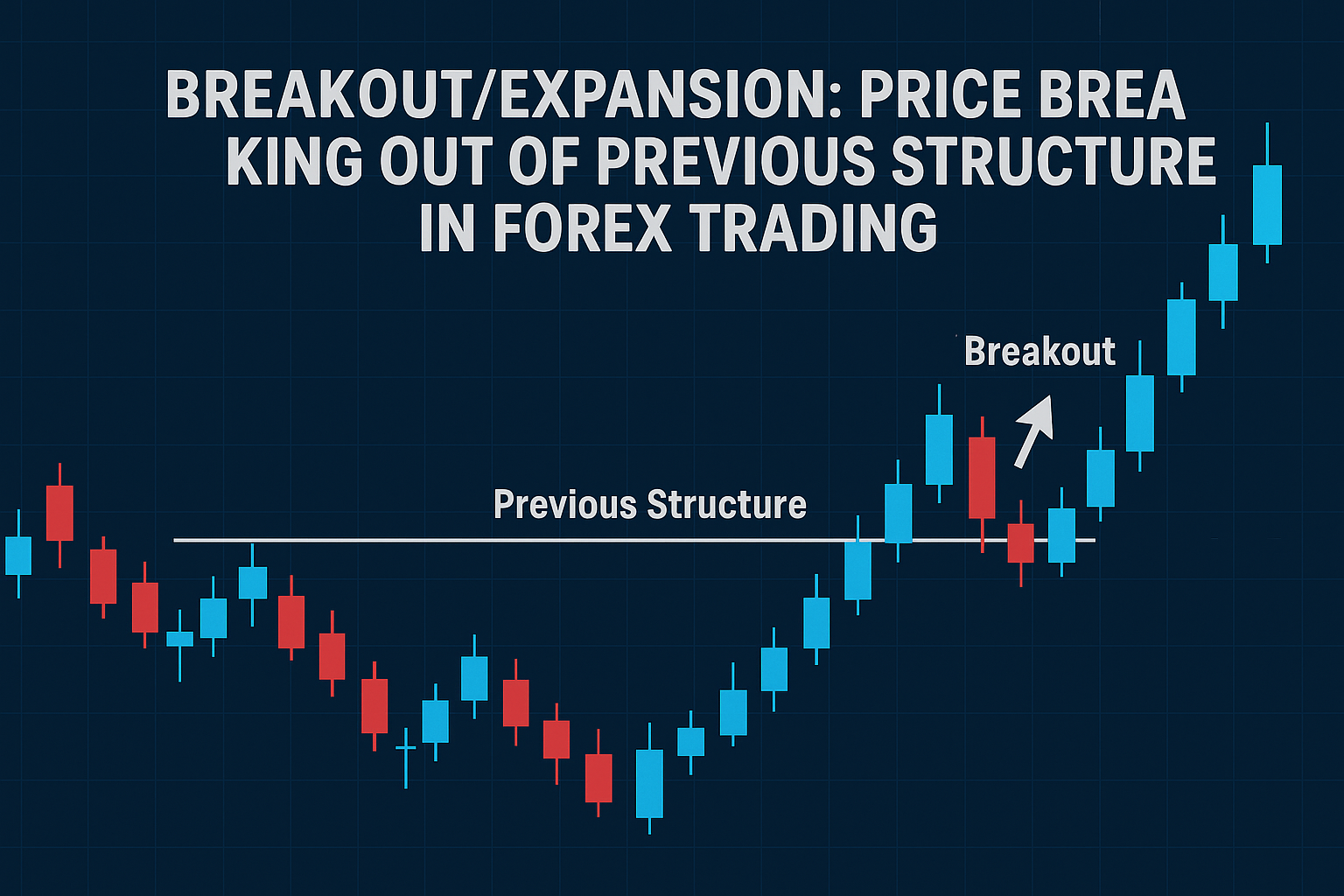
In the fast-paced world of Forex trading, recognizing and capitalizing on market trends is the key to consistent profitability. One of the most powerful and actionable trends that traders can use is the Breakout/Expansion pattern — where the price breaks out of a previous structure, often leading to strong directional moves and high reward opportunities.
If you’re serious about improving your strategy, learning how to spot and trade breakouts is essential. In this guide from InvidiaTrade, we’ll take a deep dive into:
- What a breakout/expansion trend is
- Why it matters in Forex trading
- How to identify breakout structures
- Entry and exit strategies
- Tools and indicators
- Common mistakes to avoid
- Real-world examples
- And how to master this strategy with confidence
Let’s break it all down.
What Is a Breakout/Expansion Trend?
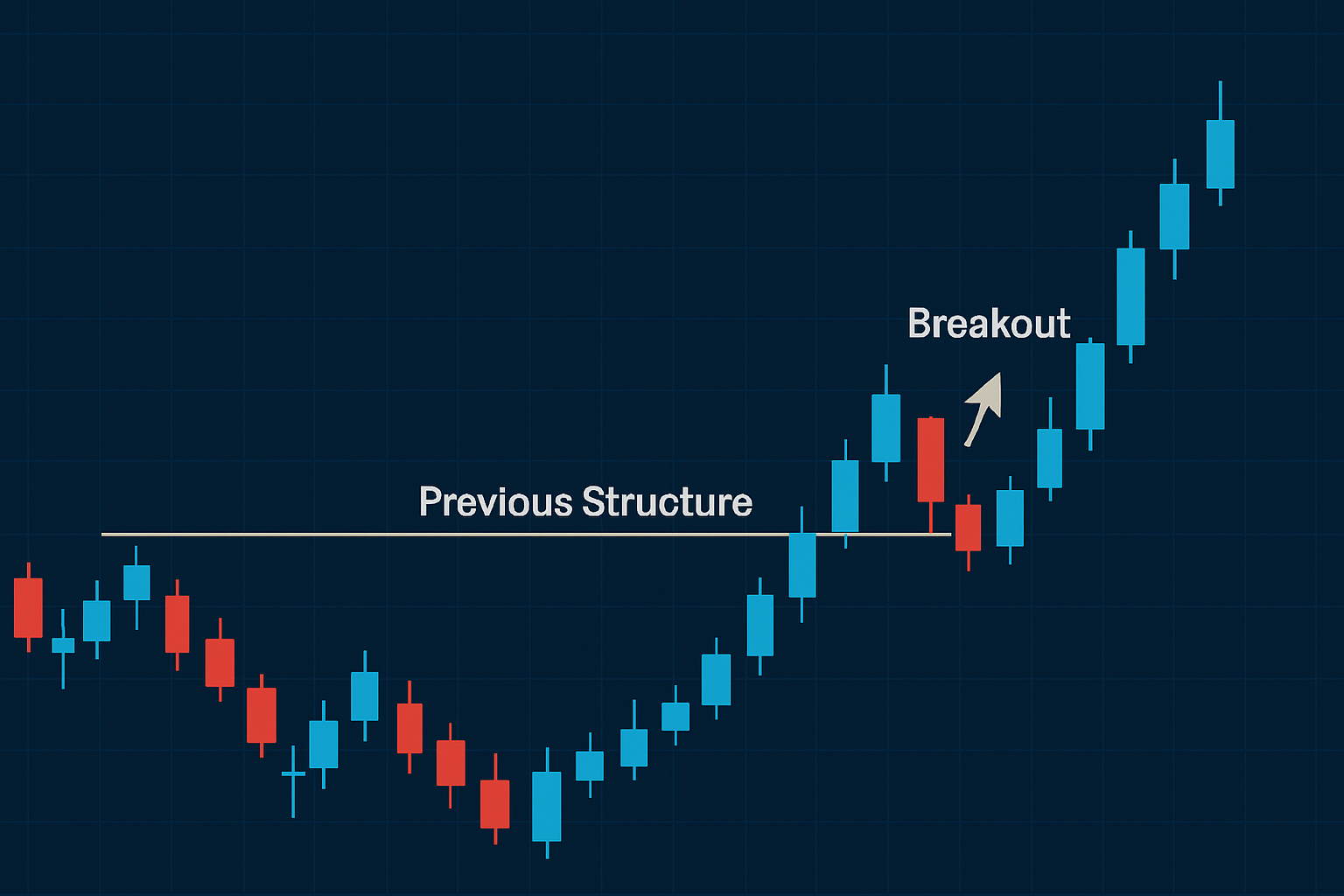
A breakout occurs when the price moves beyond a defined level of support or resistance, effectively breaking out of a consolidation zone or trading range. When this breakout is sustained and leads to significant price movement, it’s referred to as an expansion.
In other words, breakout/expansion is when the price:
- Exits a horizontal or narrowing structure
- Breaks a clear boundary (support/resistance, triangle, channel)
- Begins moving rapidly in a new direction
Breakouts signal a change in market dynamics, where the tug-of-war between buyers and sellers is finally won, and momentum accelerates in one direction.
Why Breakouts Matter in Forex Trading
Breakouts are high-probability trading opportunities because:
- They often signal the start of a new trend
- They can produce strong momentum and volume
- They offer clear entry points with logical stop-loss placements
- They are used by institutional and retail traders alike
When traded properly, breakout trades can be low-risk and high-reward, especially when paired with good risk management and confirmation tools.
Types of Breakout Structures
Before we trade a breakout, we must recognize the structure being broken. Here are the most common breakout scenarios:
1. Horizontal Support and Resistance
This is the classic breakout scenario. The price trades sideways (consolidation), and then suddenly breaks above resistance or below support.
- Bullish breakout: Price breaks above resistance
- Bearish breakout: Price breaks below support
2. Chart Patterns (Triangles, Flags, Pennants)
Many continuation or reversal patterns end in breakouts.
- Ascending Triangle – Bullish breakout
- Descending Triangle – Bearish breakout
- Symmetrical Triangle – Breakout can go either way
- Bull/Bear Flags – Short consolidations that lead to expansion
3. Range Boundaries
A range-bound market eventually has to break. When price exits the range and doesn’t return, an expansion follows.
4. Psychological Levels (Round Numbers)
Breakouts often occur at whole numbers like 1.1000 or 1.2000, especially in major currency pairs.
How to Identify Potential Breakouts Before They Happen
The best breakout traders learn to anticipate the move before it happens, not just react.
Here are pre-breakout clues:
- Price compression: Tightening range or smaller candles
- Volume buildup: Increasing volume as price nears key level
- Failed attempts: Price tries and fails multiple times to break a level
- Wick rejections: Price probes a level but is rejected—until the real breakout occurs
- Volatility drops: Low volatility often precedes big moves
Pro tip: Breakouts from low volatility environments are often the most explosive.
Entry Strategies for Breakout Trades
There are two main ways to enter a breakout:
1. Breakout Entry (Aggressive)
- Enter as soon as the price breaks the key level
- Use confirmation on lower timeframes
- Ideal for momentum traders
Pros: Early entry = maximum potential reward
Cons: Higher chance of false breakouts (fakeouts)
2. Break-and-Retest Entry (Conservative)
- Wait for the breakout
- Then wait for price to retest the broken level (now flipped as support/resistance)
- Enter after confirmation (e.g., bullish candle after retest)
Pros: Lower risk of fakeouts
Cons: You might miss the trade if no retest happens
Stop-Loss and Take-Profit Placement
Correct stop-loss placement is key in breakout trading:
- For aggressive entries: Place the stop just below (buy) or above (sell) the broken level
- For retests: Place the stop beyond the retest zone
Take-profit strategies:
- Use previous market structure levels
- Use risk-reward ratios (e.g., 1:2 or 1:3)
- Use trailing stops to let profits run
- Measure the height of the prior range or pattern and project it in the breakout direction
Best Indicators for Breakout Confirmation
While price action alone can be enough, using indicators for confirmation strengthens your strategy.
Top tools to use:
- Volume – Increased volume validates breakout strength
- Moving Averages – Crosses or MA alignment can confirm trend direction
- ATR (Average True Range) – Measures volatility; breakout candles often exceed ATR
- RSI (Relative Strength Index) – Watch for strong momentum readings (>70 or <30)
Bollinger Bands – Breakouts occur when price escapes tight bands
Real-World Example: EUR/USD Bullish Breakout
Imagine EUR/USD has been consolidating in a tight range between 1.0950 and 1.1000 for several days. Price forms higher lows, showing buyer pressure.
Suddenly, EUR/USD breaks above 1.1000 with a strong bullish candle and increased volume.
- Entry: Buy at 1.1010
- Stop: 1.0980 (below previous resistance)
- Target: 1.1100 (based on previous swing high or measured move)
Result: A clean 90-pip gain with solid risk-reward (3:1).
Breakout Trading in Different Timeframes
Breakouts can happen on any timeframe—from 1-minute charts to weekly charts.
- Scalpers trade small breakouts on 1M/5M/15M charts
- Day traders focus on breakouts during major sessions (London, New York)
- Swing traders use 4H/Daily breakouts with larger targets
- Position traders look at weekly/monthly structures
Choose the timeframe that fits your trading style and availability.
Breakout vs Fakeout: Spotting False Breakouts
Not all breakouts lead to sustained moves. Sometimes, price breaks a level and immediately reverses—this is called a fakeout.
How to protect yourself:
- Use confirmation (volume, retests)
- Avoid trading during low liquidity periods (e.g., before news, after market close)
- Look for multiple confluences, not just one signal
Trade with the broader trend (avoid counter-trend breakouts unless experienced)
Tips for Trading Breakouts Successfully
- Don’t chase price. Wait for confirmation or a retest.
- Avoid trading during major news unless you’re experienced.
- Set alerts at key levels and wait patiently.
- Keep your charts clean—structure is everything.
- Stick to one or two pairs to become familiar with their behavior.
- Record your trades and learn from both wins and losses.
Common Mistakes to Avoid
- Entering every breakout candle without confirmation
- Ignoring higher timeframe structure
- Using overly tight stop losses
- Trading into support/resistance zones without checking confluence
- Ignoring economic news that could reverse breakouts
Breakout trading is powerful, but it requires discipline, patience, and solid risk control.
Why Breakout Trading Works Well with Smart Technology
At InvidiaTrade, we’re big believers in combining strategy with technology. Breakouts are ideal for:
- Manual traders who want clean setups
- Algorithmic traders using breakout-based bots
- Hybrid traders combining manual analysis with automated execution
Breakouts are simple, logical, and repeatable—everything you want in a trading system.
Backtesting Breakout Strategies
Before trading live, it’s smart to backtest breakout setups.
- Use software or a demo account
- Test across multiple pairs and timeframes
- Record win rate, average reward-to-risk, and drawdowns
- Look for patterns (time of day, session, pair behavior)
Backtesting gives you confidence and helps avoid emotional mistakes in live trading

Essential Trading Tools Every Serious Trader Uses (And How to Choose the Right Ones)
A practical overview of how a forex demo account works and what traders should know before getting started.

Trading News That Actually Matters: How to Filter Market Noise From Real Opportunity
Table of Contents START A DEMO ACCOUNT WITH INVIDIATRADE HERE Most traders do not lose because they are uninformed. They lose because they are overloaded.

Trading Analysis Explained: How Professionals Read Markets Before Placing a Trade
Table of Contents START A DEMO ACCOUNT WITH INVIDIATRADE HERE Disclaimer (InvidiaTrade): This article is for educational purposes only and does not provide financial, investment,

What Makes a Best Trading Platform?
Table of Contents START A DEMO ACCOUNT WITH INVIDIATRADE HERE When people search for the best trading platform, they often expect a single answer. In

Day Trading: What It Is, How It Works, and the Risks You Must Know
Table of Contents Day trading gets a lot of attention because it looks exciting. Trades happen quickly, charts move fast, and results show up in

Trading Sites: What They Are, How They Work, and How to Pick One You Can Trust
Table of Contents START A DEMO ACCOUNT WITH INVIDIATRADE HERE Trading sites have become the main gateway to the markets. Years ago, trading felt like
Should You Trade Breakouts?
If you like:
- Clean setups
- High probability entries
- Momentum-based moves
- Logical stop-loss and take-profit
- Scalability for growth
Then breakout/expansion trading is likely a perfect fit.
It’s also beginner-friendly once you learn how to identify market structure, use confluence, and manage risk.
Conclusion: Breakout/Expansion Is a Core Market Trend You Should Master
The breakout/expansion trend is one of the most fundamental and profitable market structures you can learn. Whether you’re a day trader, swing trader, or EA user, understanding how to identify and trade breakouts will significantly level up your performance.
At InvidiaTrade, we’re here to help you spot clean setups, pair them with reliable execution, and grow as a confident, disciplined trader.
Start practicing this strategy today—and watch your trading results expand along with the breakout.
Disclaimer
Trading foreign exchange on margin carries a high level of risk and may not be suitable for all investors. This information is for educational purposes only and should not be considered financial advice. Always conduct your own research or consult with a licensed financial advisor before making investment decisions. Past performance does not guarantee future results.