Cautious Investors vs. High Spenders

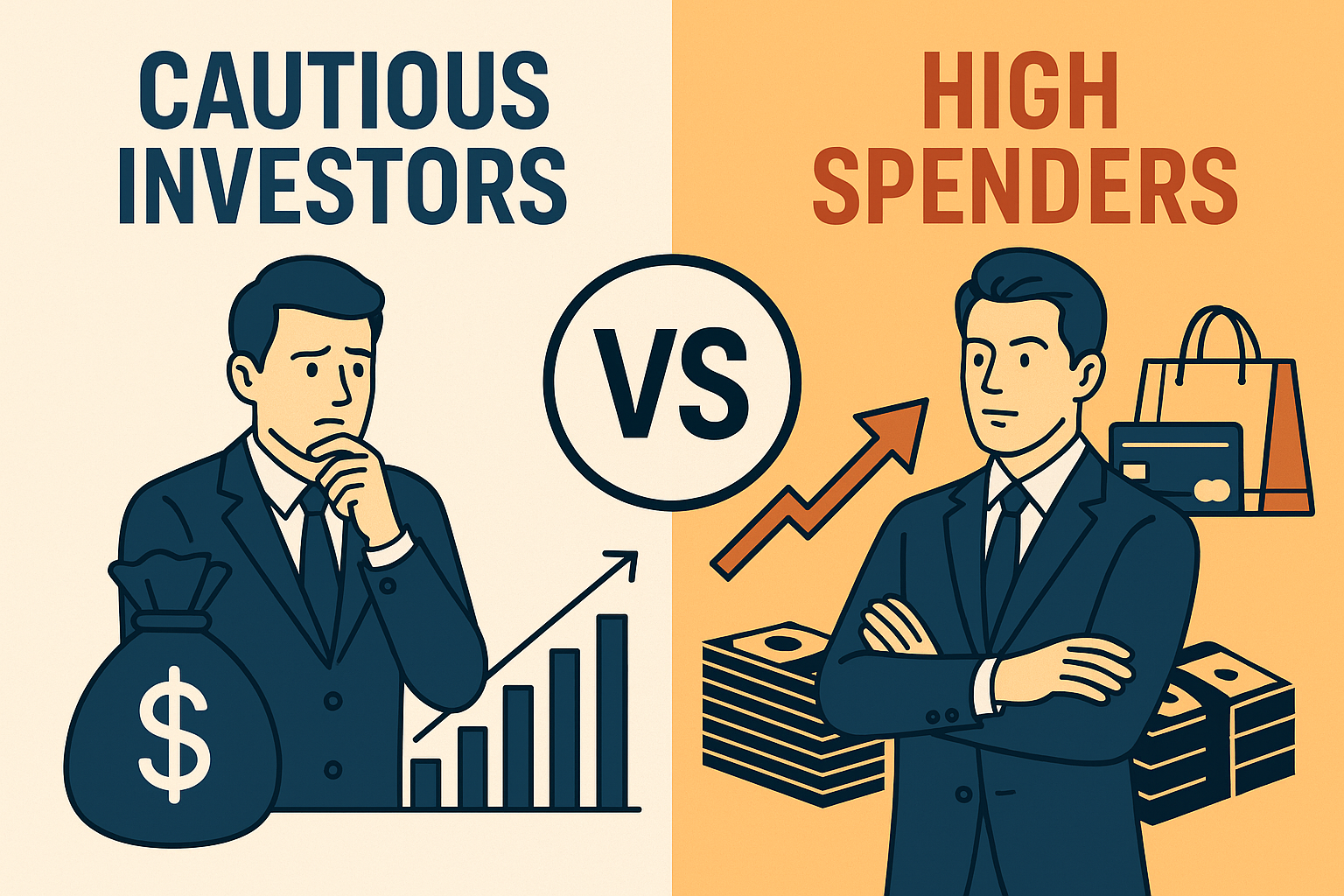
In the world of finance and trading, two very different personalities dominate the conversation: cautious investors vs. high spenders. These two groups approach wealth-building, risk, and long-term success from opposite ends of the spectrum. One leans on discipline, risk management, and consistency. The other thrives on bold moves, quick gains, and sometimes aggressive spending strategies.

Cautious Investors vs. High Spenders

Which mindset creates more success? The truth lies somewhere in the middle. In this article, we’ll explore the psychology, advantages, risks, and real-world results of both cautious investors and high spenders. By the end, you’ll know which path might be better for your own trading and investment goals.

Understanding the Cautious Investor

The cautious investor prioritizes safety, stability, and long-term growth over quick wins. This type of investor is often associated with risk-averse strategies, such as:

  • Diversified portfolios: Spreading investments across multiple asset classes like stocks, bonds, ETFs, and forex to minimize risk.
  • Consistent contributions: Investing small amounts regularly rather than chasing big trades.
  • Emphasis on research: Carefully analyzing market conditions, reading financial reports, and relying on proven strategies.
  • Focus on preservation: Protecting capital is more important than high returns.

Cautious investors are sometimes called “defensive investors” because their strategies are built to weather volatility.

Traits of Cautious Investors

  • Patient: Willing to wait for compounding to work over years or decades.


  • Analytical: Depend heavily on data, charts, and macroeconomic factors.


  • Disciplined: Avoid emotional decision-making and stick to their plan.


  • Moderate spenders: Lifestyle often reflects financial restraint.


In short, cautious investors often build wealth steadily, avoiding dramatic losses but also potentially missing out on explosive opportunities.

Understanding the High Spender

High spenders live on the other side of the spectrum. They embrace risk, boldness, and aggressive financial moves. This mindset is not limited to lifestyle spending; it extends into how they trade and invest.

High spenders often:

  • Make large, concentrated bets on single assets.


  • Chase high-risk, high-reward opportunities such as speculative stocks, cryptocurrencies, or leveraged forex positions.


  • Move quickly and capitalize on hype or short-term momentum.


  • Value status and lifestyle, sometimes using their financial gains to showcase wealth.


Traits of High Spenders

  • Risk-takers: Willing to lose big for the chance to win big.


  • Confident: Strong belief in their ability to pick winners.


  • Impulsive: More likely to act on gut instinct than analysis.


  • Lifestyle-driven: Enjoy spending profits on luxury items or experiences.


This approach can generate massive wins—but it can also lead to devastating losses if markets turn against them.

Cautious Investors vs. High Spenders: Psychology of Risk

At the heart of the debate between cautious investors and high spenders is one word: risk.

  • Cautious investors see risk as something to be minimized. They believe that avoiding large drawdowns is the key to compounding over the long term.


  • High spenders see risk as opportunity. They believe that fortune favors the bold, and without big moves, the rewards will never be life-changing.


Both approaches have merit. History is full of examples of people who built fortunes slowly and steadily (like Warren Buffett), and others who struck it rich quickly through bold decisions (like early crypto adopters).

The difference lies in psychological tolerance. Cautious investors sleep well at night knowing their money is protected. High spenders thrive on adrenaline, willing to take swings that might make or break their future.

Financial Performance: Who Wins Over Time?

The debate isn’t just about personality—it’s about results. So how do cautious investors vs. high spenders perform in the long run?

Cautious Investors

  • Pros: Consistency, smaller drawdowns, more reliable growth.


  • Cons: May miss out on rapid wealth-building opportunities. Returns often lag behind aggressive investors during bull markets.


High Spenders

  • Pros: Can achieve life-changing wealth quickly with the right bet.


  • Cons: Higher risk of catastrophic loss. Poor risk management often wipes out gains.


Data-backed Insight:

Studies in behavioral finance show that the average retail investor underperforms the market largely because of emotional decisions—often aligned with high spender tendencies. Cautious investors, while not always achieving the highest peaks, tend to have better long-term survival rates in the markets.

Lifestyle Impact: Saving vs. Spending

The cautious investor often prioritizes saving and reinvesting. Their lifestyle choices mirror their financial philosophy:

  • Living below their means.


  • Building emergency funds.


  • Avoiding unnecessary debt.


High spenders, on the other hand, see money as a tool for enjoying life now. They are more likely to:

  • Spend profits on luxury cars, vacations, or designer brands.


  • Value social status symbols.


  • View money as renewable rather than scarce.


This difference doesn’t just shape financial outcomes—it also influences overall happiness. Some cautious investors may regret not enjoying life sooner, while some high spenders may regret wasting wealth on short-term pleasures.

Cautious Investors vs. High Spenders

Real-World Examples: Cautious vs. High Spenders

Example 1: The Cautious Investor

Consider someone who invests $1,000 monthly into an S&P 500 index fund for 20 years. Even with modest returns, they can accumulate hundreds of thousands of dollars, benefiting from compounding.

Example 2: The High Spender

Contrast this with an investor who puts $20,000 into a speculative crypto token. If the token skyrockets, they might turn it into $200,000 overnight. But if it crashes, they could lose it all.

Both examples highlight the potential outcomes of each approach: one is steady and reliable, the other is fast but risky.

Which Strategy is Better in Forex Trading?

At InvidiaTrade, we see both cautious investors and high spenders entering the forex markets.

  • Cautious investors often prefer strategies like swing trading or algorithmic trading, where risk management tools such as stop-losses are applied.
  • High spenders may chase leverage, placing oversized positions in hopes of outsized gains.

In forex, risk management is key. Even a high spender must learn to set stop-losses and position sizes correctly—or risk blowing up their account.

For most traders, combining cautious discipline with occasional bold moves is the ideal balance.

Blended Approach: The Best of Both Worlds

The real winners often combine the strengths of both cautious investors and high spenders.

  1. Core Conservative Strategy: Maintain a safe foundation of diversified investments.
  2. Risk Capital Allocation: Set aside a smaller portion of funds for bold moves, like trading volatile assets.
  3. Lifestyle Balance: Enjoy life with some high-spending experiences while keeping savings intact.

This hybrid model gives the stability of the cautious investor with the excitement and upside potential of the high spender.

SEO Comparison Table: Cautious Investors vs. High Spenders

Feature

Cautious Investors

High Spenders

Risk Tolerance

Low

High

Focus

Preservation & steady growth

Rapid gains

Strategy

Diversification, compounding

Concentrated bets, leverage

Lifestyle

Frugal, future-focused

Luxury-driven, status-oriented

Strength

Long-term consistency

High upside potential

Weakness

Missed opportunities

Risk of large losses

How to Decide Which You Are

Ask yourself:

  • Do you lose sleep when markets dip? → You lean cautious.
  • Do you get excited about doubling your money quickly? → You lean high spender.
  • Do you want the best of both worlds? → You may benefit from a blended approach.

The key is self-awareness. Your financial personality will guide your strategy—and acknowledging it can help you avoid mistakes.

Cautious Investors vs. High Spenders

Final Thoughts: Cautious Investors vs. High Spenders

When comparing cautious investors vs. high spenders, it’s clear there is no one-size-fits-all winner. Each approach reflects different priorities: safety vs. growth, patience vs. boldness, long-term planning vs. living in the moment.

For most traders and investors, the ideal path lies in balance. Build a strong foundation like a cautious investor but allow yourself the freedom to take high-spender opportunities—without risking everything.

At InvidiaTrade, we believe in equipping traders with the tools, education, and strategies to succeed no matter where they fall on the spectrum. Whether you’re cautious or bold, risk-aware or risk-loving, the markets reward those who plan, learn, and execute with discipline.