


Introduction (Consolidating)
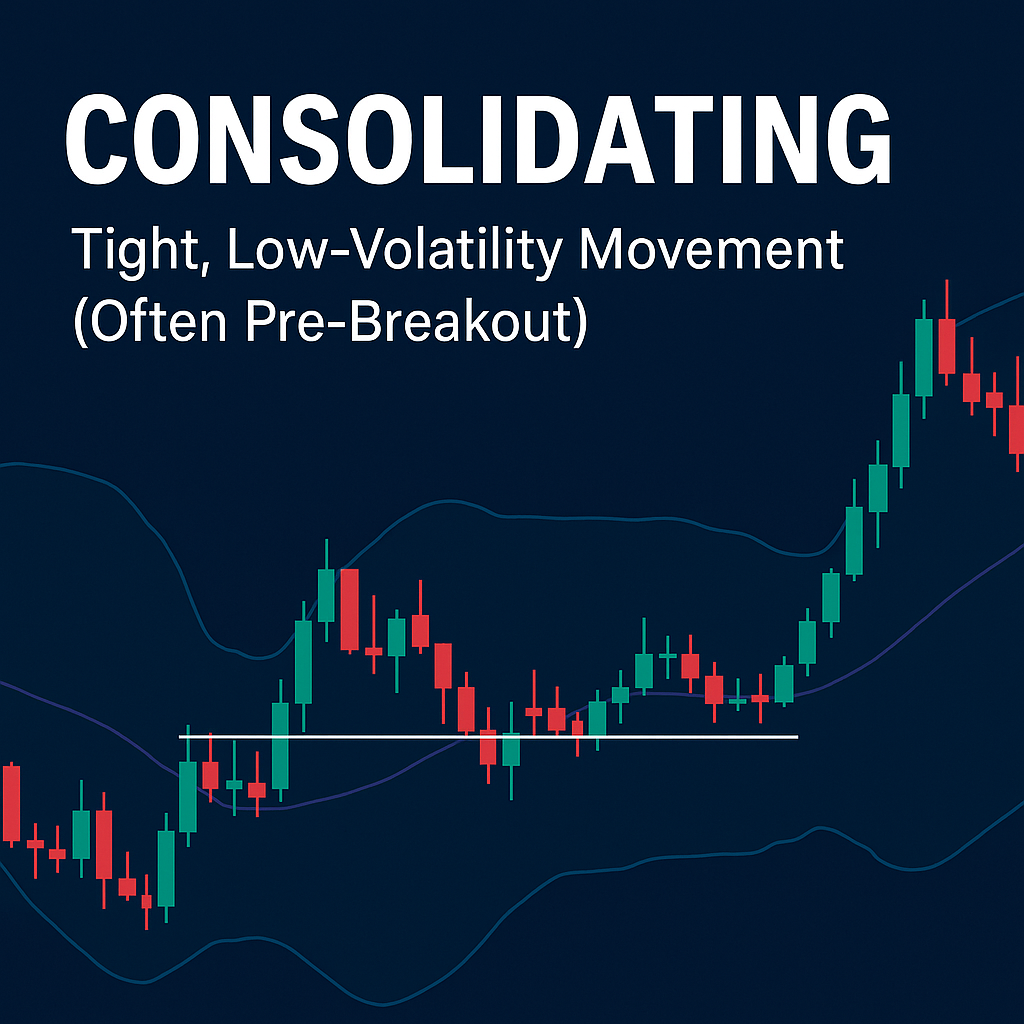
In the world of trading, price movements are the lifeblood of opportunity. While volatility often captures the headlines with dramatic price swings and big wins (or losses), there’s a more subtle and equally important phase of the market: consolidation. This phase, characterized by tight, low-volatility movements, can signal the calm before the storm – the prelude to a major breakout. (consolidating)
In this comprehensive guide, we’ll explore what consolidation means, how to identify it, and most importantly, how traders can take advantage of this often-overlooked market behavior. Whether you’re a seasoned trader or just starting, understanding consolidation can enhance your strategy and prepare you for the next big move.
What Is Consolidation? (Consolidating)
At its core, consolidation refers to a period when a financial asset’s price trades within a narrow range, showing minimal volatility and lacking a clear directional trend. During this phase, buyers and sellers are in a kind of equilibrium, with neither side strong enough to push prices decisively higher or lower.
These periods can last for hours, days, or even weeks, depending on the time frame and asset in question. Many traders view consolidation as “boring,” but seasoned market participants recognize its value. It represents a buildup of energy – a coiling spring ready to unleash a new trend.
Key Characteristics of Consolidation (Consolidating)
Understanding the key characteristics of a consolidating market is crucial:
- Tight Price Ranges: The price moves within a defined horizontal range, often bounded by clear support and resistance levels.
- Low Volatility: The overall price movement (measured by indicators like Average True Range or Bollinger Bands) contracts compared to previous trends.
- Decreasing Volume: Market participation often slows down during consolidation, as traders await a breakout.
- No Clear Trend: There’s no obvious higher highs or lower lows. Instead, price action “chops” sideways.
- Often Pre-Breakout: Consolidation frequently precedes strong price moves, either upward or downward.
Why Does Consolidation Happen? (Consolidating)
Market consolidation occurs due to several reasons:
- Market Indecision: Traders and investors are waiting for new information (e.g., economic reports, earnings releases) before committing to a direction.
- Profit Taking and Rebalancing: After a strong trend, traders may lock in profits, causing prices to pause and stabilize.
- Supply and Demand Equilibrium: The forces of buyers and sellers balance out, with neither side dominating.
- Psychological Levels: Key price levels (like round numbers or previous highs/lows) can attract market participants, contributing to the sideways movement.
How to Identify Consolidation Zones
Spotting consolidation zones on a chart involves looking for specific technical patterns and indicators:
- Horizontal Support and Resistance Levels: Draw lines at the upper and lower bounds of the price range where price repeatedly reverses.
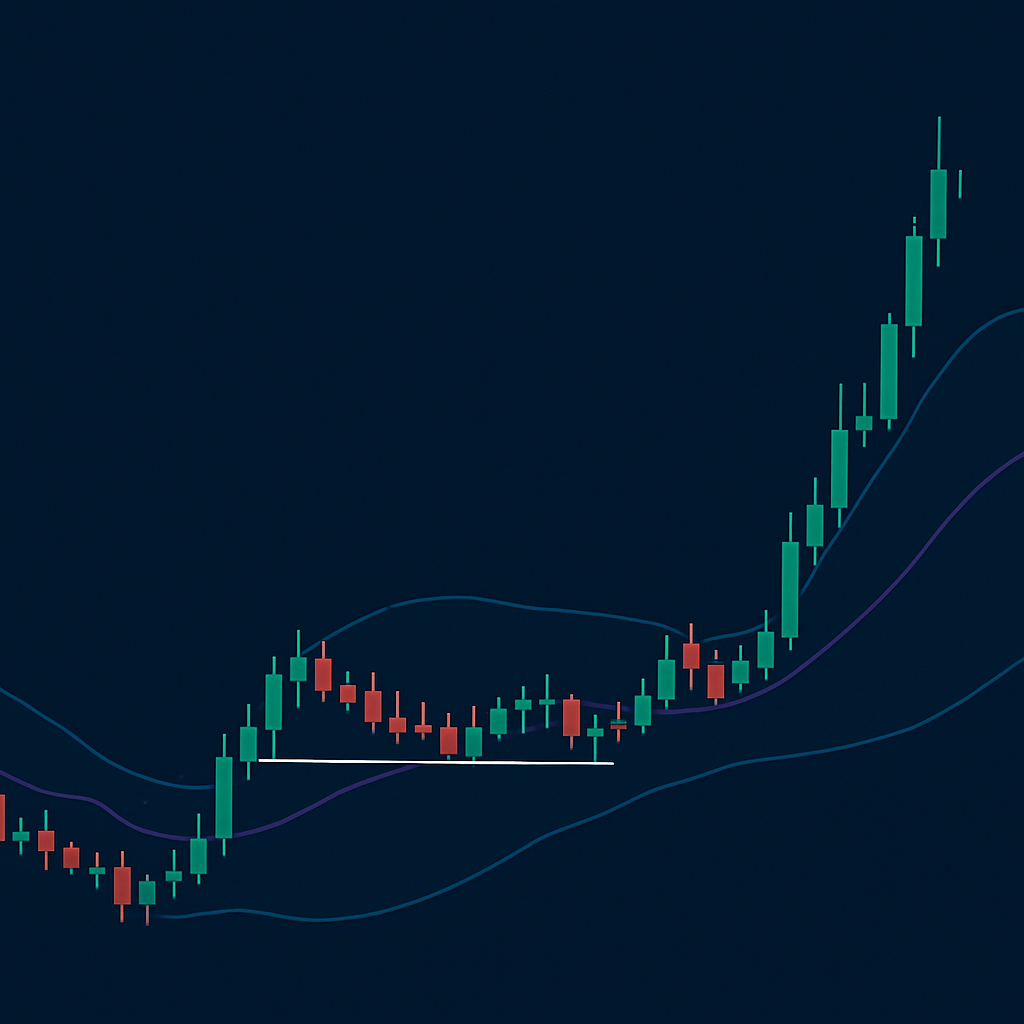
- Contracting Bollinger Bands: When the distance between the bands narrows, it indicates reduced volatility.
- Low Volume: Declining trading volume during sideways price movement is a classic sign of consolidation.
- Chart Patterns: Recognizable patterns such as rectangles, pennants, flags, or symmetrical triangles often indicate consolidation.
Consolidation – Tight, Low-Volatility Movement Before the Breakout
The reason consolidation is so fascinating to traders is its role as a setup for breakouts. A breakout occurs when price finally escapes the tight range of consolidation, often with increased volume and volatility.
This makes consolidation a prime hunting ground for breakout traders who anticipate the next big move. The key is patience – waiting for the market to show its hand.
Example of Consolidation Leading to a Breakout:
Let’s say a stock has been trading between $95 and $100 for two weeks. The Bollinger Bands are tightening, and daily trading volume has dropped. Suddenly, after a key news release, the stock surges above $100 on high volume. This breakout from consolidation offers a potential buying opportunity with a favorable risk/reward ratio.
Consolidation Across Different Markets (Consolidating)
Consolidation isn’t limited to stocks. It can be observed in:
- Forex (Currency Pairs): Currency pairs often consolidate during off-peak trading hours or ahead of major economic events.
- Cryptocurrencies: Crypto markets frequently consolidate before major announcements or after significant price rallies.
- Indices and Commodities: Whether it’s the S&P 500, gold, or oil, consolidation is a universal market behavior.
Understanding how each market consolidates and recognizing its unique “personality” can help you anticipate breakouts more effectively.
How to Trade Consolidation Effectively (Consolidating)
Trading during consolidation can be tricky, but it can also offer excellent risk-managed opportunities. Here are strategies to consider:
1️⃣ Wait for the Breakout
- Breakout Strategy: Identify consolidation zones and wait for price to break above resistance or below support with increased volume. Enter the trade in the breakout direction.
- Confirmation: Use indicators like RSI or MACD to confirm the breakout’s strength.
- Stop Loss Placement: Place stop losses just below support (for bullish breakouts) or above resistance (for bearish breakouts) to manage risk.
2️⃣ Range-Bound Trading
- Buy Low, Sell High: If you’re confident the consolidation will continue, trade within the range – buying at support and selling at resistance.
- Use Tight Stops: Protect yourself against false breakouts or sudden volatility spikes.
3️⃣ Use Indicators to Confirm Consolidation
- Bollinger Bands: Contracting bands indicate low volatility, signaling potential consolidation.
- ATR (Average True Range): A declining ATR supports the low-volatility observation.
- Volume Analysis: Low trading volume during consolidation often precedes high-volume breakouts.
The Psychology Behind Consolidation
Understanding the psychology of market participants during consolidation can give you an edge:
- Uncertainty: Traders are hesitant, waiting for clarity. Some fear entering too early, while others hesitate to close positions.
- Accumulation or Distribution: Smart money may accumulate positions quietly during consolidation, preparing for a breakout.
- Complacency: Retail traders may get bored and stop paying attention – until the breakout happens.
This psychological “tug-of-war” creates the perfect storm for sharp, decisive moves once a breakout occurs.
Tips for Mastering Consolidation Trading (Consolidating)
- Patience is Key: Wait for the market to confirm its intentions. Avoid jumping into trades just because price is “stuck.”
- Volume is Your Friend: Watch for increasing volume as price approaches support or resistance levels.
- Don’t Overtrade: Consolidation can tempt traders into taking unnecessary trades. Stick to your plan.
- Use Multiple Timeframes: Analyze consolidation on both lower and higher timeframes to spot potential breakout zones.
- Stay Informed: Monitor news and economic events that could trigger the breakout.
Common Mistakes to Avoid During Consolidation (Consolidating)
- Forcing Trades: Just because price is moving doesn’t mean you have to trade. Consolidation periods often involve “fakeouts” – brief moves outside the range that quickly reverse.
- Ignoring Risk Management: Always use stop losses to protect against unexpected breakouts in the wrong direction.
- Overlooking Volume: Volume confirms the strength of a breakout. A breakout without volume is often a trap.
Conclusion: Embrace the Calm Before the Storm
Consolidating – tight, low-volatility movement isn’t just a dull phase of market inactivity. It’s a critical moment where market forces balance out, preparing for a potential breakout. By mastering the art of recognizing and trading consolidation zones, you can position yourself for high-probability trades when the market finally makes its move.
At InvidiaTrade.com, we believe in empowering traders with knowledge and strategies to navigate every phase of the market – from wild trends to quiet consolidations. Start watching for these tightening patterns on your favorite charts today. The next big breakout could be just around the corner!

CFDs Trading Explained: How Contracts for Difference Work, Risks Included
Many people enter the markets looking for clarity. They hear about forex, stocks, indices, and commodities, but they are still unsure how trading actually works.

Essential Trading Tools Every Serious Trader Uses (And How to Choose the Right Ones)
A practical overview of how a forex demo account works and what traders should know before getting started.

Trading News That Actually Matters: How to Filter Market Noise From Real Opportunity
START A DEMO ACCOUNT WITH INVIDIATRADE HERE Most traders do not lose because they are uninformed. They lose because they are overloaded. Trading news is

Trading Analysis Explained: How Professionals Read Markets Before Placing a Trade
START A DEMO ACCOUNT WITH INVIDIATRADE HERE Disclaimer (InvidiaTrade): This article is for educational purposes only and does not provide financial, investment, or trading advice.

What Makes a Best Trading Platform?
START A DEMO ACCOUNT WITH INVIDIATRADE HERE When people search for the best trading platform, they often expect a single answer. In reality, “best” depends

Day Trading: What It Is, How It Works, and the Risks You Must Know
Day trading gets a lot of attention because it looks exciting. Trades happen quickly, charts move fast, and results show up in minutes instead of