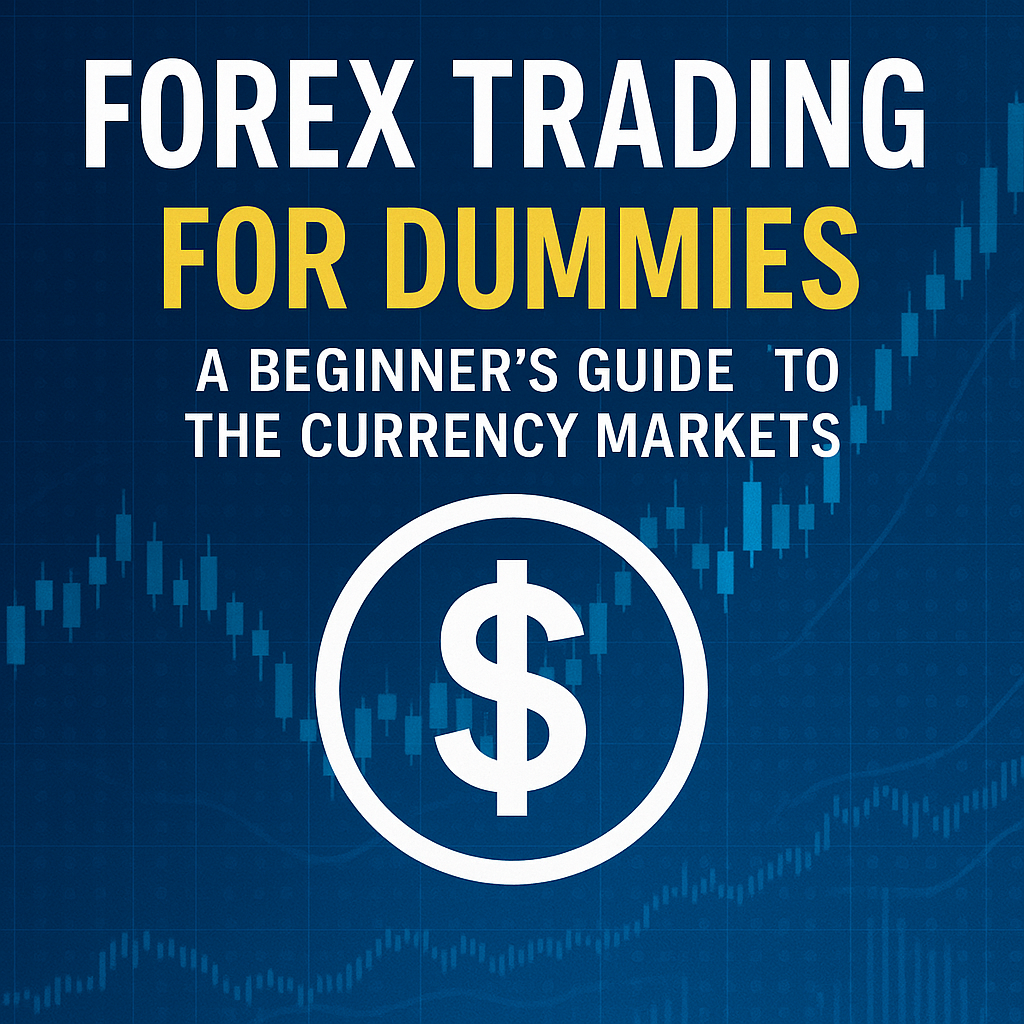




forex trading for dummies

Introduction

Ever wondered what Forex trading is and how people make money trading currencies online? You’re not alone. If you’re new to trading or just curious about what it means to “trade the Forex,” this guide is your perfect starting point. This is Forex trading for dummies—simplified, jargon-free, and made for total beginners. (forex trading for dummies)

forex trading for dummies

What Is Forex Trading?

Forex (short for foreign exchange) is the global marketplace where currencies are bought and sold. It’s the most liquid financial market in the world, with over $7.5 trillion traded daily as of 2024.

Unlike stocks or commodities, Forex trading involves currency pairs—like EUR/USD or GBP/JPY. You’re essentially betting on the price movement between two currencies.

(forex trading for dummies)

Example:
If you think the Euro will increase in value against the US Dollar, you’ll buy EUR/USD. If it does rise, you make a profit. If it drops, you incur a loss.

Why People Get Into Forex Trading

  1. Accessibility – All you need is an internet connection, a computer, and a trading account.
  2. Low Capital Entry – You can start with as little as $100.
  3. Leverage – Some brokers offer leverage up to 1:1000, which amplifies gains (and losses).
  4. 24/5 Market – The Forex market is open 24 hours a day, 5 days a week.

Global Reach – You’re trading international currencies, making it a worldwide market.

Key Forex Trading Terms Every Beginner Must Know

Let’s break down the core terms in simple language:

  • Currency Pair – Two currencies you’re trading (e.g., USD/JPY).
  • Pip – Smallest price move in a pair (usually 0.0001).
  • Lot – A standardized trading size (1 lot = 100,000 units).
  • Leverage – Borrowed money to increase your trade size.
  • Margin – The amount of money required to open a position.
  • Spread – Difference between the buying and selling price.
  • Stop Loss – A tool to minimize loss by automatically closing a losing trade.

Take Profit – A tool to automatically close a trade once a certain profit is achieved. (forex trading for dummies)

How Does Forex Trading Work?

You make money by speculating whether one currency will rise or fall against another. Forex trading happens on platforms provided by regulated brokers. Trades are executed digitally using trading software like MetaTrader 4 (MT4) or MetaTrader 5 (MT5). (forex trading for dummies)

Example Trade:

  1. You buy EUR/USD at 1.1000.
  2. The price rises to 1.1100.
  3. You close your position.
  4. You earn the difference, depending on your lot size and leverage.

Types of Forex Traders

There are different trading styles, and your lifestyle and personality may determine what suits you best.

  1. Scalper – Opens trades for seconds or minutes; targets small profits per trade.
  2. Day Trader – Opens and closes trades within the same day.
  3. Swing Trader – Holds trades for days or weeks.

Position Trader – Holds trades for months or even years.

Forex Trading Strategies for Dummies

1. Trend Trading

Follow the direction of the market trend. If it’s going up, you buy. If it’s going down, you sell.

2. Breakout Trading

Trade when the price breaks out of a support or resistance zone, expecting it to continue in that direction.

3. News Trading

Use economic news (like interest rate decisions or employment data) to predict price movement.

4. Swing Trading

Use technical indicators to catch medium-term market moves.

Tools You Need to Get Started

✅ A Reliable Broker

Choose one that is regulated, offers low spreads, and provides educational support. (Tip: InvidiaTrade can help you start safely.)

✅ Trading Platform

Most beginners use MT4 or MT5. These platforms let you open trades, analyze charts, and use expert advisors (automated bots).

✅ Demo Account

Practice trading with virtual money until you’re confident enough to go live.

forex trading for dummies

How to Read a Forex Chart (Made Simple)

Charts might look intimidating, but they’re just visual price movements.

  • Candlestick Chart – Each “candle” shows the price movement within a time frame (e.g., 1 hour).
    • Green Candle = Price went up.
    • Red Candle = Price went down.
  • Support & Resistance – Levels where the price usually stops falling (support) or rising (resistance).

Indicators – Tools that help predict where the market may go (RSI, Moving Averages, MACD). (forex trading for dummies)

What Moves the Forex Market?

  1. Central Bank Policies (e.g., interest rate changes)
  2. Economic News (GDP, inflation, employment data)
  3. Political Events (elections, war, sanctions)
  4. Market Sentiment (fear or greed among traders)

Supply and Demand for certain currencies

Common Mistakes Forex Beginners Make

  1. Overleveraging – Trading with too much borrowed money.
  2. Revenge Trading – Trying to recover losses quickly.
  3. No Stop Loss – Not using stop loss leads to blown accounts.
  4. Ignoring Risk Management – Risking too much per trade.

Lack of Education – Jumping into real trading without learning first.

Risk Management Tips for Dummies

  • Risk only 1–2% of your account on a single trade.
  • Use stop losses to protect your capital.
  • Avoid trading during major news events unless you understand the risks.
  • Don’t let emotions control your trading decisions.

How to Choose the Best Forex Broker for Beginners

When selecting a Forex broker, consider:

  • Regulation and license
  • Customer support quality
  • Minimum deposit requirement
  • Trading platform ease-of-use
  • Educational resources (forex trading for dummies)
  • Account types (Standard, ECN, Demo)

👉 InvidiaTrade partners with trusted brokers that are beginner-friendly and secure.

Should You Use a Forex Trading Bot?

Many beginners ask whether to use automated bots (Expert Advisors or EAs). While EAs can save time, you must understand what they do and monitor them regularly.

Pros:

  • Works 24/5
  • Emotion-free trading
  • Useful for testing strategies

Cons:

  • Not 100% accurate
  • Requires oversight
  • Can blow accounts if misused

Is Forex Trading Profitable for Dummies?

Yes, but not without education, discipline, and practice.

Many people lose money because they treat Forex like gambling. But with a solid strategy, risk management, and patience, you can build long-term success.

Steps to Start Forex Trading Today

  1. Learn the Basics (like you’re doing now!)
  2. Open a Demo Account
  3. Choose a Reliable Broker
  4. Download a Trading Platform (MT4/MT5)
  5. Practice Trading With a Strategy
  6. Switch to a Real Account When Ready
  7. Track Your Performance and Keep Learning (forex trading for dummies)
forex trading for dummies

FAQs: Forex Trading for Dummies

❓ Is Forex Trading Legal?

Yes, Forex trading is legal in most countries. Make sure you use a regulated broker(forex trading for dummies)

❓ How Much Can I Make Trading Forex?

It depends on your capital, risk, strategy, and discipline. Most beginners should aim for consistent small wins, not overnight success.

❓ Can I Trade Forex on My Smartphone?

Yes! Most brokers offer mobile apps with full trading capabilities. But be cautious—don’t overtrade just because it’s convenient.

Conclusion: Start Small, Learn Big

Forex trading can be an exciting and potentially rewarding activity—but it’s not a get-rich-quick scheme. If you’re truly a beginner, take it slow, learn the terms, use a demo account, and never risk money you can’t afford to lose.

At InvidiaTrade, we’re here to guide you every step of the way, from beginner tutorials to connecting you with trustworthy brokers and expert advisors. (forex trading for dummies)

Disclaimer

Forex trading involves substantial risk and may not be suitable for all investors. The information provided in this article is for educational purposes only and should not be considered financial advice. Please consult a licensed financial advisor before making investment decisions. Past performance is not indicative of future results.