

Choosing an online trading platform is one of the most important decisions a trader will make. Many people think the platform is simply where trades are placed. In reality, it influences almost every part of the trading process.
Your platform affects how you read charts, how quickly you can react, how clearly you can manage risk, and how well you can review your performance over time. A weak platform can create confusion, delays, and unnecessary mistakes. A strong one can help support discipline, better execution, and more confident decision-making.
This is one of the clearest areas where professional traders and amateur traders think differently. Amateur traders often choose an online trading platform based on what looks exciting or what seems easiest at first. Professional traders focus on reliability, functionality, control, and long-term suitability.
In this article, we will look at the key features that matter most and explain what truly separates a professional platform setup from an amateur one.
What Is an Online Trading Platform?
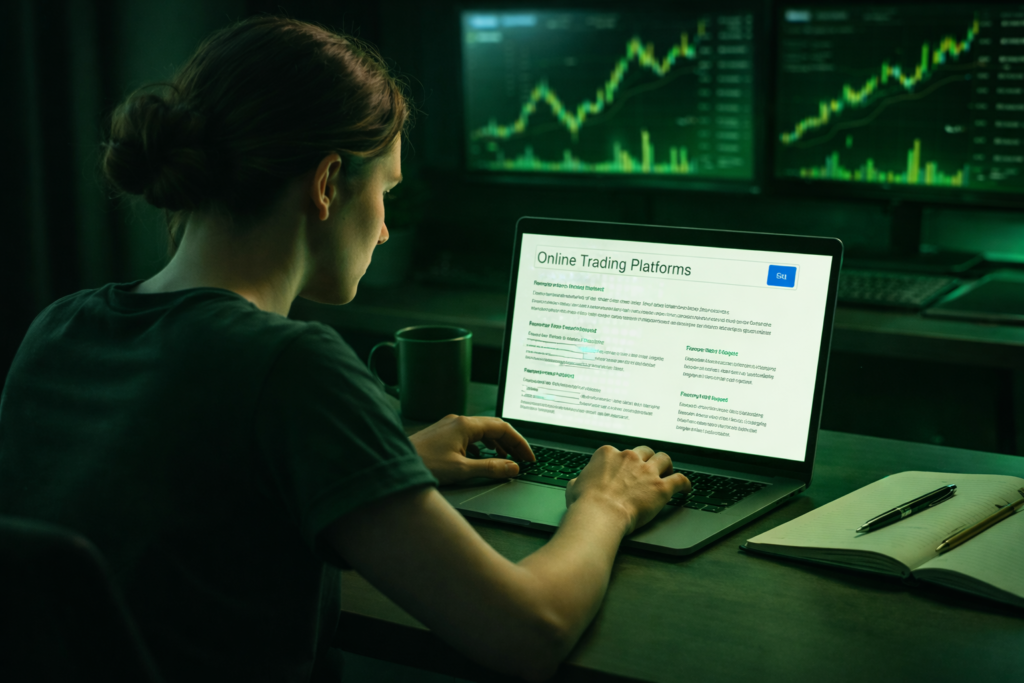
An online trading platform is the software environment traders use to access markets and manage their trading activity. It acts as the central place where analysis and execution come together.
Most platforms allow traders to:
- Monitor live prices
- Open and close positions
- Analyze charts
- Use indicators
- Set stop loss and take profit orders
- Review account history
- Track balance, margin, and exposure
Depending on the broker or provider, an online trading platform may offer access to:
- Forex
- Commodities
- Indices
- Stocks
- Crypto-related products
- CFDs
At first glance, many platforms can seem very similar. They all appear to let you trade. But once you start using them regularly, the real differences become much more important.
Some platforms are designed mainly for simplicity. Others are designed to support more serious traders who need structure, speed, risk control, and better data.
That is why this decision deserves careful attention.
Why the Platform Matters So Much
A lot of beginners assume that trading success is mostly about finding the right strategy. Strategy is important, but strategy alone is not enough. You still need a solid environment to apply it properly.
Imagine you identify a strong setup and know your entry, stop loss, and target. If your platform is lagging, cluttered, or unstable, your plan becomes harder to execute correctly. That can turn a good idea into a poor trade.
A quality online trading platform helps traders:
- Execute with less friction
- Stay organized
- Control risk more clearly
- Monitor trades with confidence
- Learn from results over time
Professional traders understand this. They do not treat the platform like a basic app. They treat it like part of their working environment. If the environment is poor, performance usually becomes harder to maintain.
How Amateurs Usually Choose a Platform
Amateur traders often focus on the wrong things first. They may choose a platform because:
- It looks modern
- It is heavily advertised
- It seems popular online
- It feels easy to use immediately
- It promises an exciting experience
None of those things are automatically bad, but they are not enough. A platform can look polished and still be weak where it matters most.
Amateur traders also tend to focus too heavily on entry opportunities while ignoring the tools that support better discipline. They may not think much about analytics, execution quality, trade review, or order control.
That is one reason many beginners struggle early. They enter the market without building the right structure around their decisions.
How Professionals Choose an Online Trading Platform
Professional-minded traders ask deeper questions. They care about whether the platform actually helps them operate better.
They often ask things like:
- Is the platform stable in live conditions?
- Does it offer clean charting?
- Can I manage risk properly here?
- Is execution dependable?
- Can I review my performance with useful data?
- Will it fit my trading style over time?
This is a more mature way to compare options. It shifts the focus away from hype and toward practical performance.
A serious trader wants an online trading platform that helps reduce avoidable mistakes and supports better habits.
Key Feature One: Reliable Execution
Execution is one of the most important parts of trading. If a platform cannot handle orders properly, that becomes a serious issue very quickly.
A strong online trading platform should allow traders to:
- Enter positions quickly
- Exit trades efficiently
- Use pending orders without confusion
- Adjust open trades smoothly
- Place stop losses and take profits accurately
Execution quality matters because markets move quickly. A small delay can affect your entry price or your exit level. In fast-moving markets, that difference can be meaningful.
Professionals understand that reliable execution is not just about speed. It is also about consistency. The platform should behave properly during both normal conditions and busy market periods.
A trader who cannot trust execution is always dealing with added uncertainty.
Key Feature Two: Functional and Clear Charting
A platform’s charting tools should make market analysis easier, not harder. A quality online trading platform needs to provide charting that is clean, responsive, and practical.
Useful charting features often include:
- Multiple timeframes
- Drawing tools
- Technical indicators
- Saved chart layouts
- Fast switching between assets
- Clear price action display
Professional traders do not need charts to look flashy. They need charts to help them think clearly. A good chart should let the trader focus on structure, momentum, levels, and opportunity without unnecessary clutter.
Better charting helps traders identify:
- Trend direction
- Support and resistance
- Breakouts
- Pullbacks
- Reversals
- Consolidation areas
- Entry and exit zones
When charts are easy to read, traders are more likely to stay disciplined and consistent.
Key Feature Three: Strong Risk Management Tools
This is one of the biggest separators between pros and amateurs.
Amateurs often think first about profit. Professionals think first about protection.
A good online trading platform should make it easy to manage:
- Stop loss placement
- Take profit placement
- Position size visibility
- Margin requirements
- Account exposure
The more clearly the platform shows risk, the easier it becomes to make responsible decisions. When those details are hidden or confusing, traders are more likely to guess, oversize, or enter carelessly.
Professional traders value platforms that make risk obvious before the trade is placed. They want to know what is at stake before they commit capital.
That is not just a helpful feature. It is a necessary part of disciplined trading.
Key Feature Four: Stability During Volatile Markets
A platform may work well when markets are quiet. The real test comes during volatility. If it starts freezing, disconnecting, or delaying data during key moments, that becomes a major weakness.
A serious online trading platform should stay usable during:
- Session opens
- News releases
- Sharp market moves
- High-volume trading periods
Platform stability matters because traders need access at all times. They need to monitor positions, change orders, and respond to market conditions without worrying about technical failure.
Professionals understand that platform risk is real risk. They respect stability because they know even a good plan can be damaged by a weak system.
Key Feature Five: A Clean and Logical Interface
The best platforms are not always the most complicated. In many cases, the most useful ones are the ones that keep important functions clear and easy to reach.
A well-designed online trading platform should make it easy to move between:
- Charts
- Watchlists
- Orders
- Open positions
- Account details
- Notifications
- Performance history
A messy interface creates unnecessary friction. That leads to stress and mistakes. A clean layout, on the other hand, supports clear thinking.
Professional traders appreciate efficiency. They do not want to waste energy clicking through confusing menus or searching for essential functions. They want the platform to support their workflow.
Key Feature Six: Mobile Access That Still Gives Real Control
Mobile access matters more than ever. Traders may not always be at their desk, but they still need the ability to monitor and manage positions with confidence.
A good online trading platform should offer a mobile experience that allows users to:
- Check live price movement
- Review charts
- Monitor open positions
- Adjust stop losses and take profits
- Place or close trades
- Receive important alerts
Professionals may still prefer doing full analysis on desktop, but they want the flexibility to stay in control while away from it.
A weak mobile app creates extra risk. If it feels too limited or difficult to use, it can become a problem when fast action is needed.
That is why mobile functionality should be treated as a serious factor, not just a small extra.
Key Feature Seven: Analytics and Trade Review
One major step in becoming a better trader is learning how to review performance properly. A strong online trading platform should help users understand their own trading patterns.
Useful analytics may include:
- Win rate
- Average gain
- Average loss
- Profit and loss over time
- Drawdown
- Trade frequency
- Trade duration
- Performance by market
These insights help traders move beyond emotion and into more objective thinking. Instead of focusing only on single trades, they can analyze their process over time.
Professionals rely on review. They want to know:
- What is working
- What is not working
- Whether their edge is real
- Where discipline is breaking down
A platform that supports detailed review becomes far more valuable in the long run.

Key Feature Eight: Watchlists, Alerts, and Routine Tools
Good trading is not only about reacting. It is also about preparation. That is why workflow tools can make such a big difference.
A useful online trading platform should include features like:
- Watchlists
- Price alerts
- Saved chart templates
- Notifications
- Market filters
These tools help traders stay organized and focused. They also reduce the urge to chase the market out of boredom or emotion.
For example:
- Watchlists help you focus only on the assets that matter
- Alerts notify you when important price levels are reached
- Saved layouts help keep your chart analysis consistent
Professionals build routines around these features. They use them to prepare and act with more intention. Amateurs often skip this structure and trade more randomly.
Key Feature Nine: Education That Helps Traders Build Better Habits
For newer traders, educational support can be useful. Some platforms offer tutorials, guides, webinars, and platform walkthroughs that help users understand both the software and general market basics.
Helpful platform education may include:
- How to place orders
- How to use charting tools
- How to set stop losses
- How to understand margin
- How to review account history
- How to avoid beginner mistakes
The key is that education should promote realistic thinking. It should support careful learning, not unrealistic expectations.
A good online trading platform does not need to promise quick success. It should simply help users understand the tools and build stronger habits.
Key Feature Ten: Suitability for Your Trading Style
No two traders are exactly the same. Some trade frequently. Others prefer fewer setups. Some focus on short-term opportunities. Others hold positions longer. Some want automated features. Others want a simple manual workflow.
That is why platform fit matters.
Before choosing an online trading platform, traders should ask:
- Does it support the products I want to trade?
- Does it fit my preferred timeframe?
- Does it give me the tools I actually use?
- Can it still suit me if I become more advanced later?
Professional traders make decisions based on fit, not just popularity. They understand that the right platform is the one that supports their actual process.
Common Mistakes Traders Make When Choosing a Platform
A lot of traders repeat the same platform selection mistakes. Avoiding them can save time and frustration.
Choosing based only on appearance
A nice-looking platform is not enough. The practical features matter much more.
Ignoring execution quality
Fast and dependable order handling is essential. It should never be treated like a small detail.
Underestimating risk management features
If the platform makes stop losses, take profits, margin, and exposure hard to understand, that is a problem.
Overlooking mobile performance
You may not always be at your desk. Mobile functionality matters.
Not checking reporting and analytics
Without clear trade data, it becomes harder to improve over time.
Following hype instead of fit
A popular platform may still be a poor match for your own trading style.
How to Compare Online Trading Platforms More Effectively
The best way to compare platform options is to think about practical use, not just brand image. Test the workflow and see whether it actually supports discipline.
When reviewing an online trading platform, focus on:
- Execution reliability
- Charting quality
- Risk management visibility
- Platform stability
- Mobile control
- Watchlists and alerts
- Account analytics
- Ease of navigation
- Fit with your trading style
It also helps to ask yourself:
- Does this platform make it easier to stay disciplined?
- Can I manage risk clearly here?
- Does it help me review my results properly?
- Will it still suit me as my skills improve?
- Does it reduce friction instead of adding it?
Those questions will usually tell you much more than any sales message.
Final Thoughts
Choosing an online trading platform is not just a technical decision. It is a trading decision. The platform becomes part of your daily environment, and that environment affects your execution, discipline, and results.
This is why professionals and amateurs approach the choice so differently.
Professionals want:
- Reliability
- Risk control
- Clear charting
- Stable performance
- Useful analytics
- Better workflow
Amateurs often focus on:
- Appearance
- Popularity
- Convenience alone
- Hype
- Excitement
A strong online trading platform will not guarantee trading success, but it can absolutely support better habits and more consistent decision-making. It can help reduce avoidable mistakes and make it easier to trade with a more structured mindset.
If you are serious about improving, take platform selection seriously as well. It is one of the foundations that shapes every trading decision that comes after.
Disclaimer
Trading and investing involve substantial risk, and losses may exceed deposits depending on the financial product being traded. This article is provided for educational and informational purposes only and does not constitute financial advice, investment advice, or a recommendation to use any specific platform, broker, or trading method. Past performance is not a reliable indicator of future results. Always do your own research, assess your financial situation carefully, and use proper risk management before making any trading decisions.

AUD Explained: Australian Dollar Strength, Interest Rates, and Forex Market Trends
Table of Contents The Australian dollar has been one of the currencies attracting attention in the forex market during 2026. A combination of Australian monetary

Define Foreign Exchange Management: Meaning, Strategies, and Currency Risk Explained
Table of Contents To define foreign exchange management, think of it as a system for dealing with the uncertainty created when the value of

Top Earning Traders: How the World’s Most Successful Traders Built Their Edge
Table of Contents The world’s top earning traders have generated fortunes from some of the most competitive markets on the planet. Some traded currencies.

AI to Buy and Sell Crypto: A Complete Guide to Automated Crypto Trading
Table of Contents Crypto markets move quickly, operate continuously, and produce enormous amounts of data. Because of this, many traders are now looking at AI

Quantitative Trading Explained: How Data, Algorithms, and Systematic Strategies Work
Table of Contents Quantitative trading is one of the most important developments in modern financial markets. Banks, hedge funds, proprietary trading firms, and independent

London Session Forex Time: Why the London Session Is the Most Important Period in Forex Trading
Table of Contents The forex market is open 24 hours a day during the trading week, allowing traders around the world to participate at