
Introduction
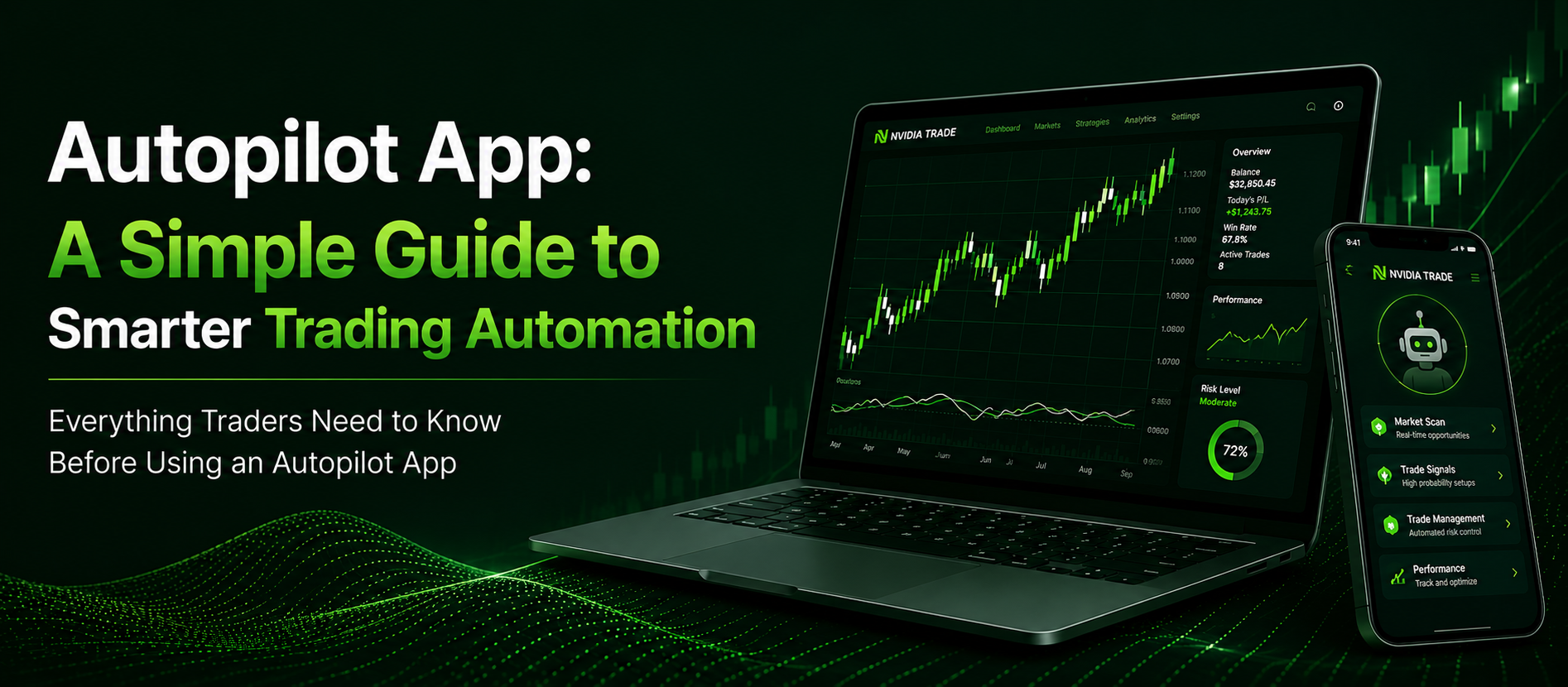
An autopilot app is becoming a popular idea among traders who want a simpler way to interact with the market. Many people are interested in trading, but they do not always have the time, experience, or emotional discipline to manage every step manually.
This is where automation becomes attractive.
An autopilot app can help traders monitor markets, follow rules, receive alerts, and manage certain trading tasks with less manual effort. It can make the process feel more organized and less stressful.
However, it is important to be clear from the start.
No autopilot app can guarantee success.
Trading always involves risk. Automation can support a trader, but it cannot remove uncertainty from the market. A trader still needs a plan, proper risk management, and a realistic mindset.
This guide explains what an autopilot app is, how it works, why traders use it, and what to consider before relying on automation.
What Does Autopilot App Mean in Trading?
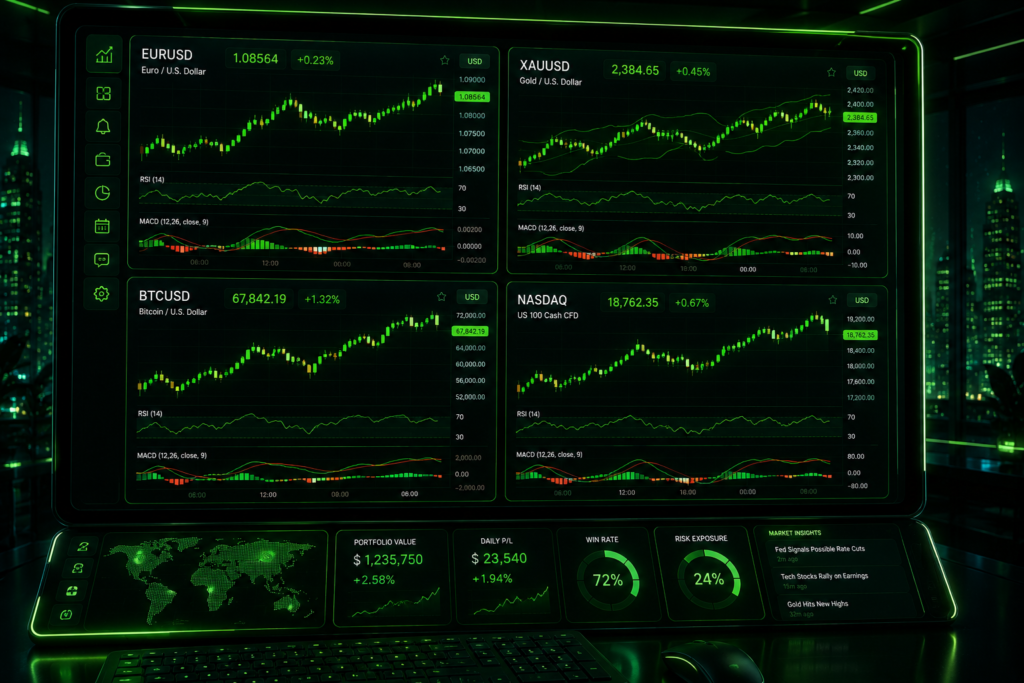
In trading, an autopilot app usually refers to a tool that helps automate part of the trading process.
This may include alerts, signals, strategy tracking, order support, or connection with trading software. Some apps may only notify the user when a setup appears. Others may help manage trades based on predefined rules.
The main purpose is simple.
An autopilot app helps reduce manual work.
Instead of watching charts all day, traders can use technology to help them monitor conditions, follow a system, and stay organized.
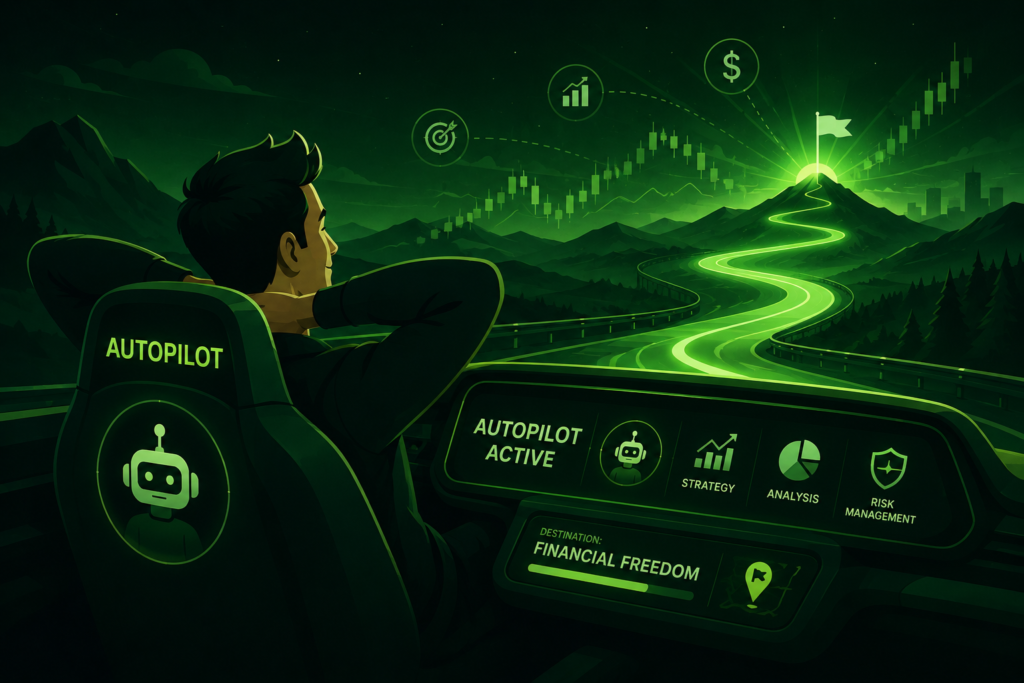
But the word autopilot should not be misunderstood. It does not mean the trader can ignore the market completely. It also does not mean profits are automatic.
A better way to understand it is this:
An autopilot app can assist the trader, but the trader is still responsible.
Why Traders Look for Autopilot Apps
Trading can be demanding.
Prices move quickly. News can change the market in seconds. Emotions can affect decisions. Many traders also have limited time.
Because of this, traders often look for tools that can help them simplify the process.
An autopilot app may help with:
- Monitoring markets
- Reducing screen time
- Following rules
- Managing alerts
- Improving consistency
- Reducing emotional reactions
- Supporting risk management
- Tracking performance
This can be especially useful for traders who want a more structured routine.
Instead of reacting randomly, they can use an app to help them follow a process.
How an Autopilot App Works
Every autopilot app is different, but most follow a similar basic idea.
The app receives data, analyzes that data, and helps the trader take action or stay informed.
For example, the app may look at price movement, trend direction, technical indicators, or market conditions. Then it may send an alert or support a trading rule.
In some cases, an autopilot app may connect with trading software that can execute or manage trades.
A basic workflow may look like this:
- The trader sets preferences or chooses a strategy.
- The app monitors market conditions.
- The app identifies potential opportunities.
- The app sends alerts or supports trade management.
- The trader reviews results and adjusts risk when needed.
The goal is to create a smoother process.
A good autopilot app should make trading easier to manage, not harder to understand.
Autopilot App vs Trading Bot
Many traders use the words autopilot app and trading bot in a similar way, but they are not always the same.
A trading bot usually focuses on automated execution. It may open, manage, and close trades based on rules.
An autopilot app can be broader. It may include signals, alerts, dashboards, strategy tracking, education, or automation features.
Here is the simple difference:
- A trading bot usually executes rules automatically.
- An autopilot app may guide, alert, track, or automate.
- A trading bot is often focused on execution.
- An autopilot app may focus on the full user experience.
Both can be useful, but both require caution.
The trader should always understand what the tool does before using real money.
Benefits of Using an Autopilot App
An autopilot app can offer several benefits when it is used properly.
1. It Can Help Save Time
Many traders cannot watch charts for hours.
They may have work, family, school, or other commitments. An autopilot app can help monitor the market and notify them when something important happens.
This can make trading more manageable.
It allows the trader to spend less time staring at charts and more time reviewing clear information.
2. It Can Reduce Emotional Decisions
Emotional trading is one of the biggest reasons traders struggle.
A trader may enter too early, exit too late, or increase risk after a loss. These decisions often happen because of fear or greed.
An autopilot app can help by following rules.
When rules are set in advance, the trader may be less likely to make impulsive choices.
This does not remove emotions completely, but it can reduce emotional pressure.
3. It Can Create More Consistency
Consistency is important in trading.
If a trader keeps changing methods, it becomes hard to know what is working.
An autopilot app can help the trader follow the same process over time. This can make performance easier to review.
The trader can look at results and ask better questions.
For example:
- Is the strategy working in current conditions?
- Is the risk too high?
- Are trades being managed properly?
- Are losses within a reasonable range?
Consistency makes improvement easier.
4. It Can Support Better Organization
A good autopilot app can bring everything into one place.
This may include signals, alerts, performance, settings, and account information.
For traders, organization matters.
When information is scattered, mistakes can happen. When everything is clear, it is easier to make better decisions.
A clean dashboard can help traders stay focused.
5. It Can Help Traders Follow a Plan
Many traders know they need a plan, but they struggle to follow it.
An autopilot app can help by turning rules into a repeatable process.
This is useful because trading success often depends more on discipline than excitement.
A simple plan followed consistently is often better than a complicated plan followed randomly.
The Risks of Using an Autopilot App
Automation has benefits, but it also has risks.
The biggest risk is overconfidence.
Some traders see the word autopilot and think the app will do everything for them. That mindset can be dangerous.
An autopilot app cannot guarantee winning trades. It cannot predict every news event. It cannot protect a trader who uses poor risk settings.
Possible risks include:
- Market volatility
- Losing streaks
- High leverage
- Poor settings
- Technical issues
- Internet connection problems
- Strategy failure
- Emotional changes by the user
- Misunderstanding how the tool works
Automation can make trading easier, but it can also make mistakes happen faster if the trader is careless.
Why Risk Management Is Essential
Risk management is the most important part of using any autopilot app.
Before using automation, traders should decide how much risk they are comfortable with.
This includes risk per trade, total account exposure, drawdown limits, and position size.
Traders should also understand leverage.
Leverage allows traders to control larger positions with a smaller amount of capital. This can increase potential profits, but it can also increase losses.
A trader using an autopilot app should always use conservative risk settings at the beginning.
It is better to start small and learn than to risk too much too early.
Features to Look For in an Autopilot App
Not every app is worth using.
A good autopilot app should be clear, safe, and easy to understand.
Important features may include:
- Simple setup
- Clear risk controls
- Transparent performance tracking
- Easy-to-read dashboard
- Strong security practices
- Helpful alerts
- Clear explanations
- Ability to pause automation
- Customer support
- Educational material
- No unrealistic promises
The app should help the trader make informed decisions.
It should not confuse the trader or pressure them into taking unnecessary risk.

Autopilot App for Forex Traders
Forex traders often look for automation because the forex market is active for long hours.
Currency pairs can move during different sessions, including London, New York, and Asian market hours. This makes it difficult for one person to monitor everything manually.
An autopilot app can help forex traders by:
- Watching multiple currency pairs
- Sending alerts
- Supporting strategy rules
- Helping manage trade timing
- Tracking results
- Reducing manual work
However, forex trading carries significant risk.
Spreads, slippage, leverage, volatility, and news events can all affect results.
A trader should not use automation in forex without understanding these factors.
Autopilot App for Beginner Traders
Beginners should be careful with automation.
An autopilot app can make trading look simple. But simple does not mean risk-free.
Before using an app, beginners should learn the basics.
They should understand:
- What a market order is
- What a stop loss is
- What a take profit is
- What leverage means
- What drawdown means
- How spreads work
- Why risk management matters
Beginners should also test the tool first.
If possible, they should use a demo account or start with a small amount.
The goal is to learn how the app behaves before using larger funds.
Autopilot App and Trading Discipline
Discipline is one of the hardest parts of trading.
Many traders lose discipline after a few wins or losses. After winning, they may become too confident. After losing, they may try to recover quickly.
Automation can help because it follows rules.
But the trader still needs discipline.
For example, a trader may feel tempted to increase risk after a good week. Or they may stop the app after one losing day. These emotional decisions can hurt long-term results.
The best approach is to review performance over a reasonable period, not from one trade or one day.
Market Conditions Matter
No trading system performs the same in every market.
Some strategies work better when the market is trending. Others work better when the market is ranging. Some may struggle during major news events.
An autopilot app may perform differently depending on conditions.
This is normal.
The trader should understand that losing periods can happen, even with a good system.
That is why performance should be reviewed carefully.
A smart trader looks at:
- Win rate
- Average loss
- Average gain
- Drawdown
- Risk per trade
- Market conditions
- Long-term performance
One good trade does not prove the app is perfect. One bad trade does not prove it is useless.
Security and Account Access
Security matters when using any financial app.
If an autopilot app connects to a broker or trading account, the trader should understand what access the app requires.
The trader should check whether the app is secure, whether permissions are limited, and whether the provider explains how data is protected.
A trader should avoid tools that seem unclear or unsafe.
Important security questions include:
- What permissions does the app need?
- Can the app withdraw funds?
- How is account data protected?
- Can access be removed?
- Is support available?
- Are terms and risks clearly explained?
A trader should never rush through account connection steps.
How to Use an Autopilot App Responsibly
Using an autopilot app responsibly means staying involved.
The trader does not need to watch every second, but they should still review performance and understand what is happening.
A responsible approach includes:
- Start with low risk
- Read instructions carefully
- Review performance weekly
- Understand drawdown
- Avoid emotional changes
- Keep realistic expectations
- Do not use money needed for daily life
- Contact support when confused
- Keep learning
Automation works best when the trader treats it as a tool.
It should support the trading plan, not replace responsibility.
Common Mistakes to Avoid
Many traders make the same mistakes when using automation.
The most common mistake is expecting fast profit.
Another mistake is increasing risk too quickly.
Some traders also change settings too often. This can make results harder to understand.
Common mistakes include:
- Risking too much too soon
- Ignoring the app’s instructions
- Not understanding leverage
- Expecting no losses
- Turning automation on and off emotionally
- Using the app without a plan
- Not reviewing performance
- Following hype instead of logic
Avoiding these mistakes can make the experience much safer.
Questions to Ask Before Using an Autopilot App
Before using an autopilot app, traders should ask clear questions.
These questions can help prevent confusion later.
Important questions include:
- What exactly does the app do?
- Does it only send alerts, or does it execute trades?
- What risks are involved?
- Can I control the risk level?
- Can I pause the app?
- Is performance transparent?
- What happens during high volatility?
- Is customer support available?
- Do I understand the strategy?
- Am I comfortable with possible losses?
If a trader cannot answer these questions, they should slow down.
Understanding comes before automation.
Why Broker Choice Still Matters
Even if a trader uses an autopilot app, the broker still matters.
A broker can affect spreads, execution speed, available markets, fees, and trading conditions.
Automation depends on good execution.
If spreads are high or execution is poor, results may be affected.
Traders should look for a broker that offers clear trading conditions, platform access, support, and transparency.
The app and broker should work together smoothly.
Autopilot App and Long-Term Trading
Automation should be viewed with a long-term mindset.
Many traders judge tools too quickly. They may expect results in a few days. But trading performance need
s time to evaluate.
A better approach is to think in weeks and months.
The trader should review whether the app helps them stay consistent, organized, and disciplined.
Long-term success depends on process.
An autopilot app can support that process, but it cannot replace patience.
Final Thoughts
An autopilot app can be useful for traders who want to save time, reduce emotional decisions, and create a more structured trading process.
It can help with alerts, automation, trade management, and performance tracking. It can also help beginners understand the value of rules and consistency.
But it is not a shortcut to guaranteed profit.
Trading involves risk, and automation does not remove that risk. The trader must still understand the market, manage exposure, review performance, and make responsible decisions.
The best way to use an autopilot app is with a clear plan.
Start small. Learn the tool. Use conservative risk settings. Review results. Stay realistic.
When used properly, an autopilot app can support smarter trading decisions. But the trader should always remain in control.
Disclaimer
Trading forex, stocks, commodities, indices, crypto, and other financial markets involves risk. Automated trading tools, autopilot apps, signals, expert advisors, and trading software do not guarantee profits and cannot prevent losses. Past performance is not a reliable indicator of future results. Market conditions can change quickly, and leveraged trading can increase both potential gains and potential losses.
This article is for educational and informational purposes only. It is not financial advice, investment advice, or a recommendation to trade any specific product, strategy, or platform. Always do your own research and consider speaking with a qualified financial professional before making financial decisions. Only trade with funds you can afford to lose.

Define Foreign Exchange Management: Meaning, Strategies, and Currency Risk Explained
Table of Contents To define foreign exchange management, think of it as a system for dealing with the uncertainty created when the value of

Top Earning Traders: How the World’s Most Successful Traders Built Their Edge
Table of Contents The world’s top earning traders have generated fortunes from some of the most competitive markets on the planet. Some traded currencies.

AI to Buy and Sell Crypto: A Complete Guide to Automated Crypto Trading
Table of Contents Crypto markets move quickly, operate continuously, and produce enormous amounts of data. Because of this, many traders are now looking at AI
Quantitative Trading Explained: How Data, Algorithms, and Systematic Strategies Work
Table of Contents Quantitative trading is one of the most important developments in modern financial markets. Banks, hedge funds, proprietary trading firms, and independent

London Session Forex Time: Why the London Session Is the Most Important Period in Forex Trading
Table of Contents The forex market is open 24 hours a day during the trading week, allowing traders around the world to participate at
Best Robo Advisors: How Automated Investing Is Changing Wealth Management
Table of Contents Investing has become more accessible than ever before. Technology has transformed the financial industry, making it possible for individuals to build