


Introduction
In the ever-evolving landscape of financial markets, identifying and understanding different market conditions is critical to trading success. One of the most vital market structures that traders encounter is the trending market. Gaining proficiency in spotting and trading within a trend can significantly enhance your trading performance. This guide offers a comprehensive look into trending markets—what they are, how to spot them, and how to trade them effectively.
Defining a Trending Market
A trending market is a condition where the price consistently moves in a particular direction—either upward or downward—over a period. There are two main types:
- Bullish Trend (Uptrend): Defined by rising peaks and higher troughs.
- Bearish Trend (Downtrend): Marked by declining highs and lower lows.
Trends can develop on various timeframes, from short intraday charts to long-term weekly or monthly movements. Early detection of a trend is often key to maximizing gains.
Key Features of Trending Markets
Trending environments showcase several distinct traits:
- Consistent Directional Movement: Clear upward or downward price momentum.
- Price Patterns: Formation of higher highs and lows (in uptrends) or lower highs and lows (in downtrends).
- Volume Confirmation: Strong trends often see a rise in trading volume, signaling trader commitment.
- Market Sentiment Reflected: Trends mirror widespread optimism or pessimism among participants.
Momentum Preservation: Price often follows the path of least resistance until a reversal or exhaustion occurs.
Three Trend Phases
Every trend typically unfolds in three distinct stages:
- Initiation/Accumulation: Experienced investors quietly enter positions.
- Momentum/Public Phase: Broader market participation drives price significantly in one direction.
- Exhaustion/Distribution: Early entrants begin to exit; reversal signs emerge.
Recognizing these stages allows traders to better time entries and exits.
Tools for Spotting Trends
- Moving Averages:
- SMA and EMA help highlight the average price over time and smooth out noise.
- Crossovers often act as trend signals.
- Trendlines and Channels: Drawing lines along price swings gives a visual representation of trend boundaries.
- RSI (Relative Strength Index): Detects momentum and potential overbought/oversold conditions.
- MACD (Moving Average Convergence Divergence): Measures the strength and direction of a trend via signal line crossovers.
- ADX (Average Directional Index): Gauges the strength of a trend without indicating its direction.
Popular Trading Strategies in Trend Conditions
Trending markets open up opportunities for a range of trading methods. Some popular approaches include:
- Trend Continuation Strategy:
- Use moving average alignment to confirm trend direction.
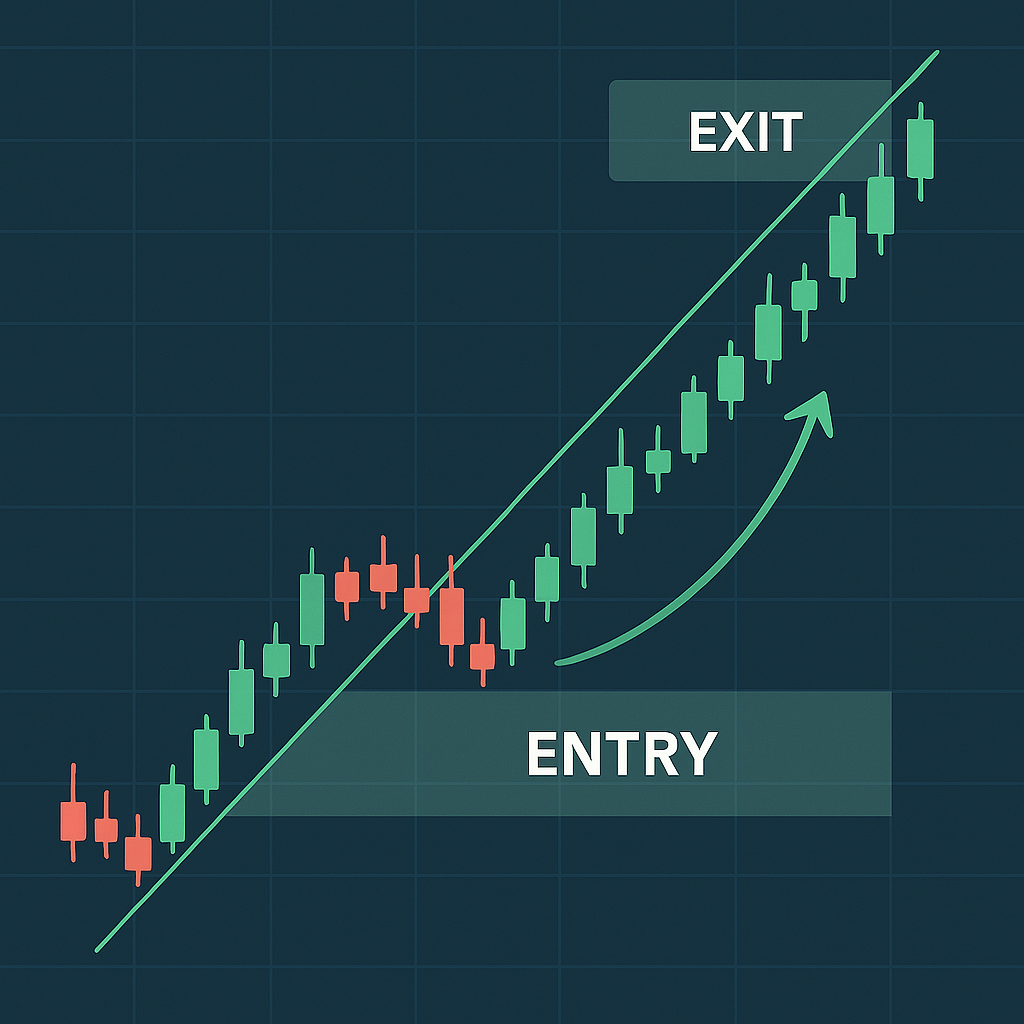
- Enter on minor pullbacks or near key support/resistance.
- Trail your stop as the trend progresses.
- Use moving average alignment to confirm trend direction.
- Breakout Strategy:
- Spot consolidation areas or classic chart patterns.
- Enter once the price breaks and holds above/below the range.
- Watch for increased volume to validate the breakout.
- Spot consolidation areas or classic chart patterns.
- Swing Trading within Trends:
- Capitalize on natural oscillations within the broader trend.
Entry based on trendline touches or RSI divergences.
Effective Risk Management for Trend Trading
Trading in trends still requires careful risk control:
- Sizing Positions Wisely: Never risk more than 1-2% of your total capital.
- Stop Loss Placement: Set stops at logical points beyond recent swing highs/lows.
- Target Setting: Predetermine your exit goals to reduce emotional decisions.
Risk-Reward Planning: Aim for setups offering at least double the reward vs risk.
Pitfalls to Avoid
Even experienced traders can fall into common traps:
- Late Entries: Jumping in after the move is well underway.
- Ignoring Reversals: Missing signs of trend exhaustion like divergences.
- Overtrading: Forcing entries without confirmation.
- Stubborn Bias: Failing to switch bias when the market structure shifts.
Real-World Trend Examples
- Bitcoin Rally (2020-2021): A major uptrend spurred by institutional investments and growing public interest.
- Gold Surge During 2008 Recession: Strong bullish trend as investors sought refuge from collapsing markets.
- S&P 500 Post-Pandemic Recovery: Rapid and sustained bullish movement following fiscal stimulus and reopening optimism.
Analyzing historical trends sharpens your ability to interpret technical patterns.
Spotting Trend Reversals
Trends don’t last forever. Look for these signs that a trend might be fading:
- MACD/RSI Divergence: Price continues in the trend direction, but indicators don’t confirm.
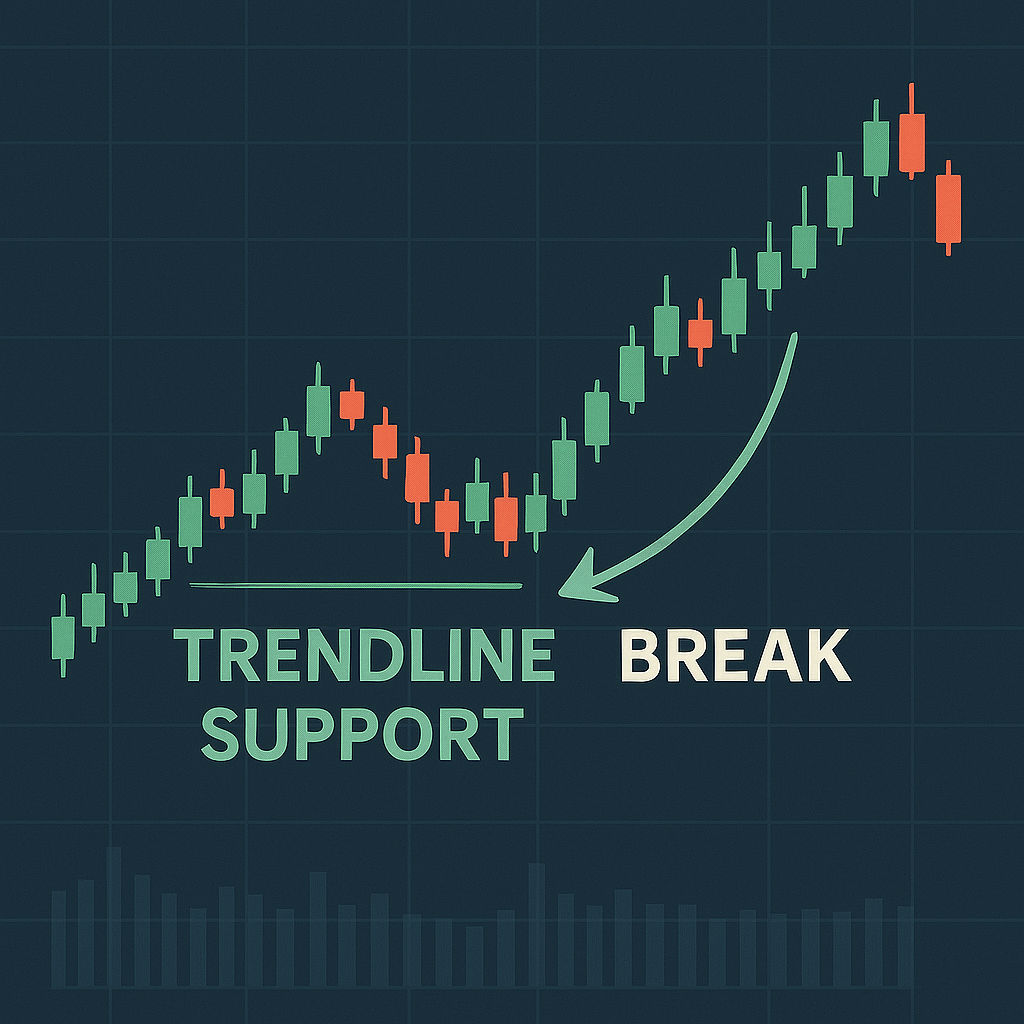
- Break in Trendline Support/Resistance: A breach can imply trend weakening.
- Volume Decline: Diminishing volume suggests lower commitment.
- Reversal Patterns: Double tops/bottoms, head and shoulders, wedges.
Psychology Behind Trending Markets
Trends are often a reflection of mass psychology:
- Emotional Swings: Greed in uptrends and fear in downtrends.
- FOMO: Traders chase entries, pushing the price further.
- Herd Behavior: Decisions based on what the crowd is doing.
Being aware of these behaviors helps maintain discipline.
Timeframes and Trading Styles
Different trading styles align with various timeframes:
- Scalping/Day Trading: Focus on trends within 5-min to hourly charts.
- Swing Trading: Use 4H to daily charts to catch short-term trends.
- Position Trading: Base trades on weekly/monthly chart trends.
Choose the timeframe that matches your personality and availability.
Closing Thoughts
Trending markets are powerful forces that, when correctly identified and traded, can lead to substantial gains. The ability to ride the wave of market sentiment, backed by strong technical analysis and smart risk management, separates successful traders from the rest. Whether you’re scalping short-term trends or investing for the long haul, mastering the art of trend trading is an essential skill in your trading toolkit.

AI Trading Bot: What Traders Should Know Before Using Automated Forex Tools
Table of Contents The forex market moves fast. Prices change every second. Traders often need to watch charts, follow news, manage risk, and make

MasterBOT Live Chart: How to Read BOT Price Trends and Market Signals
The MasterBOT live chart is useful for anyone who wants to track BOT price movement in real time. Instead of looking only at the current

Trading vs Investing Accounts: Key Differences Every Market Participant Should Know
Introduction Trading vs Investing Accounts is one of the most important comparisons for anyone entering the financial markets. Many beginners think that opening an account

How to Choose a Foreign Exchange Broker: Regulation, Costs, and Trust Factors
If you want to succeed in forex trading, choosing the right broker is one of the first big decisions you need to make. Many traders

Choosing an Online Trading Platform: Key Features That Separate Pros From Amateurs
Choosing an online trading platform is one of the most important decisions a trader will make. Many people think the platform is simply where trades

What Is a Funded Trading Account? How It Works
A funded trading account has become a big topic in the trading space. Many traders are interested in it because it offers access to capital