Logo
  • About Us
  • Trading
    • Account Types
    • PAMM Accounts
    • Pairs Stocks
  • Platforms
    • MetaTrader 5
  • IB Program
  • Support
  • Sign Up
  • Log In
Currency Strength Meter
  • Stephanie Lott
  • June 1, 2026
  • No Comments

Table of Contents

What Is a Currency Strength Meter?

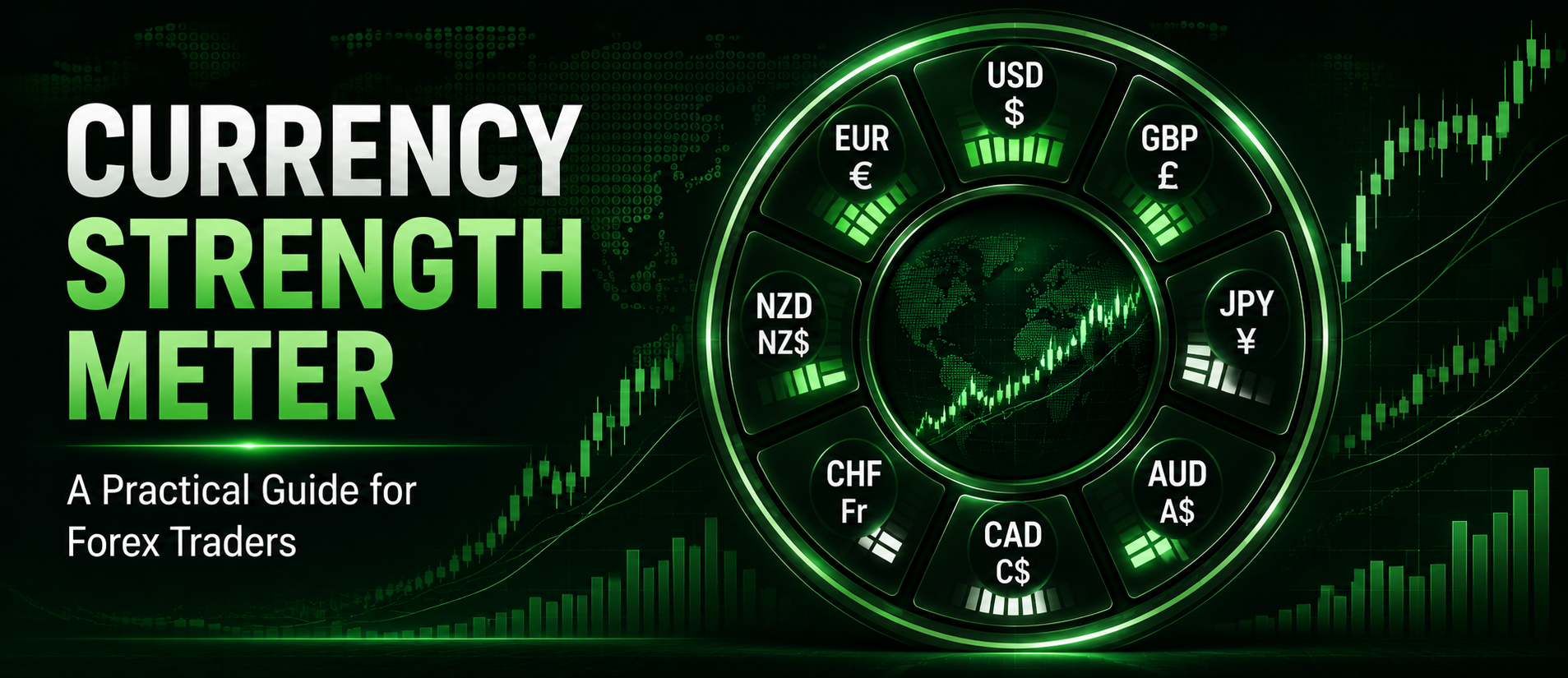
A currency strength meter is a tool that helps forex traders measure the relative strength or weakness of individual currencies.

In forex trading, currencies are always traded in pairs. This means one currency is being compared against another.

For example, EUR/USD compares the euro against the US dollar. GBP/JPY compares the British pound against the Japanese yen.

A currency strength meter looks beyond one pair. It compares currencies across multiple pairs to help traders understand which currencies are currently strong and which ones are weak.

This can help traders choose better pairs to watch and avoid markets that do not have clear direction.

Currency Strength Meter
START A DEMO ACCOUNT WITH INVIDIATRADE HERE

Why Forex Traders Use Currency Strength

Forex trading is based on comparison.

A pair moves because one currency is gaining strength compared to the other. If a trader only looks at one chart, they may miss what is happening across the broader market.

A currency strength meter can help traders answer important questions:

  • Which currency is leading the market?
  • Which currency is under pressure?
  • Which pairs may have the clearest direction?
  • Which pairs may be choppy or uncertain?
  • Does the chart setup match broader currency strength?

This can make analysis more structured.

It does not guarantee a winning trade, but it can help traders make more informed decisions.

How a Currency Strength Meter Works

Most currency strength meters use price data from multiple forex pairs.

For example, to measure the US dollar, the tool may look at several major pairs that include USD.

These may include:

  • EUR/USD
  • GBP/USD
  • USD/JPY
  • USD/CHF
  • USD/CAD
  • AUD/USD
  • NZD/USD

The tool then calculates whether the dollar is gaining or losing strength compared to other currencies.

The same process can be used for the euro, pound, yen, franc, Canadian dollar, Australian dollar, and New Zealand dollar.

Different meters may use different methods.

Some may use percentage change. Others may use moving averages, momentum, or other formulas.

This is why traders should not expect every currency strength meter to show the exact same reading.

Why Strong vs Weak Matters

One of the most common uses of a currency strength meter is finding strong currencies against weak currencies.

This can help traders find pairs that may have better directional movement.

For example:

  • Strong EUR plus weak USD may support a bullish EUR/USD idea.
  • Weak GBP plus strong JPY may support a bearish GBP/JPY idea.
  • Strong AUD plus weak CAD may support a bullish AUD/CAD idea.

This does not mean the trade should be entered immediately.

The trader still needs to check the chart.

The strength reading simply helps identify where there may be market pressure.

Currency Strength and Pair Selection

Pair selection is one of the most important parts of forex trading.

A trader may have a good strategy, but if they apply it to a pair with no clear movement, the setup may become difficult.

Currency strength can help traders filter the market.

Instead of watching every pair, traders can focus on pairs where there is a clear difference between the two currencies.

For example, if the euro is strong and the yen is weak, euro-yen pairs may deserve attention.

If the dollar and franc are both neutral, USD/CHF may not offer the clearest opportunity.

This can save time and reduce unnecessary analysis.

Currency Strength and Technical Analysis

A currency strength meter works best when combined with technical analysis.

Technical analysis helps traders study price action on the chart. Currency strength helps traders understand the broader pressure behind the chart.

Together, they can support better decision-making.

A trader may use currency strength with:

  • Support and resistance
  • Trendlines
  • Market structure
  • Moving averages
  • Breakouts
  • Pullbacks
  • Candlestick patterns
  • Risk-to-reward planning

For example, if AUD/USD is breaking above resistance and the Australian dollar is strong while the US dollar is weak, the setup may look stronger.

If AUD/USD is breaking above resistance but the Australian dollar is weak, the trader may want to be more careful.

Currency Strength and Market Structure

Market structure shows how price is moving.

A market may be trending higher, trending lower, ranging, breaking out, or reversing.

Currency strength can help confirm or question that structure.

For example, in an uptrend, traders may want to see the base currency gaining strength and the quote currency losing strength.

In EUR/USD, that means euro strength and dollar weakness.

If that relationship is present, the trend may have stronger support.

If the opposite is happening, the trend may be weakening.

This can help traders avoid blindly following a chart without understanding the broader currency relationship.

Currency Strength and Risk Management

A currency strength meter does not remove risk.

This is important.

Even if a currency looks very strong, price can reverse. News can change market direction quickly. Liquidity can shift. Volatility can increase.

Traders still need risk management.

This includes:

  • Using a clear stop loss
  • Avoiding oversized positions
  • Planning risk before entering
  • Avoiding emotional entries
  • Accepting that losses are part of trading
  • Not relying on one tool alone

The goal is not to be right every time.

The goal is to make better decisions over time and manage risk properly.

Why Forex Traders Use Currency Strength Forex trading is based on comparison. A pair moves because one currency is gaining strength compared to the other. If a trader only looks at one chart, they may miss what is happening across the broader market. A currency strength meter can help traders answer important questions: Which currency is leading the market? Which currency is under pressure? Which pairs may have the clearest direction? Which pairs may be choppy or uncertain? Does the chart setup match broader currency strength? This can make analysis more structured. It does not guarantee a winning trade, but it can help traders make more informed decisions. How a Currency Strength Meter Works Most currency strength meters use price data from multiple forex pairs. For example, to measure the US dollar, the tool may look at several major pairs that include USD. These may include: EUR/USD GBP/USD USD/JPY USD/CHF USD/CAD AUD/USD NZD/USD The tool then calculates whether the dollar is gaining or losing strength compared to other currencies. The same process can be used for the euro, pound, yen, franc, Canadian dollar, Australian dollar, and New Zealand dollar. Different meters may use different methods. Some may use percentage change. Others may use moving averages, momentum, or other formulas. This is why traders should not expect every currency strength meter to show the exact same reading. Why Strong vs Weak Matters One of the most common uses of a currency strength meter is finding strong currencies against weak currencies. This can help traders find pairs that may have better directional movement. For example: Strong EUR plus weak USD may support a bullish EUR/USD idea. Weak GBP plus strong JPY may support a bearish GBP/JPY idea. Strong AUD plus weak CAD may support a bullish AUD/CAD idea. This does not mean the trade should be entered immediately. The trader still needs to check the chart. The strength reading simply helps identify where there may be market pressure. Currency Strength and Pair Selection Pair selection is one of the most important parts of forex trading. A trader may have a good strategy, but if they apply it to a pair with no clear movement, the setup may become difficult. Currency strength can help traders filter the market. Instead of watching every pair, traders can focus on pairs where there is a clear difference between the two currencies. For example, if the euro is strong and the yen is weak, euro-yen pairs may deserve attention. If the dollar and franc are both neutral, USD/CHF may not offer the clearest opportunity. This can save time and reduce unnecessary analysis. Currency Strength and Technical Analysis A currency strength meter works best when combined with technical analysis. Technical analysis helps traders study price action on the chart. Currency strength helps traders understand the broader pressure behind the chart. Together, they can support better decision-making. A trader may use currency strength with: Support and resistance Trendlines Market structure Moving averages Breakouts Pullbacks Candlestick patterns Risk-to-reward planning For example, if AUD/USD is breaking above resistance and the Australian dollar is strong while the US dollar is weak, the setup may look stronger. If AUD/USD is breaking above resistance but the Australian dollar is weak, the trader may want to be more careful. Currency Strength and Market Structure Market structure shows how price is moving. A market may be trending higher, trending lower, ranging, breaking out, or reversing. Currency strength can help confirm or question that structure. For example, in an uptrend, traders may want to see the base currency gaining strength and the quote currency losing strength. In EUR/USD, that means euro strength and dollar weakness. If that relationship is present, the trend may have stronger support. If the opposite is happening, the trend may be weakening. This can help traders avoid blindly following a chart without understanding the broader currency relationship. Currency Strength and Risk Management A currency strength meter does not remove risk. This is important. Even if a currency looks very strong, price can reverse. News can change market direction quickly. Liquidity can shift. Volatility can increase. Traders still need risk management. This includes: Using a clear stop loss Avoiding oversized positions Planning risk before entering Avoiding emotional entries Accepting that losses are part of trading Not relying on one tool alone The goal is not to be right every time. The goal is to make better decisions over time and manage risk properly.
START A DEMO ACCOUNT WITH INVIDIATRADE HERE

Common Mistakes When Using a Currency Strength Meter

A currency strength meter can be useful, but traders often make mistakes with it.

Using It as a Signal Tool

The meter should not be treated as a direct buy or sell signal.

It is an analysis tool.

Ignoring Price Action

A strong currency does not mean every pair involving that currency should be traded.

The chart must still make sense.

Chasing Late Moves

Sometimes a currency shows strength after a large move has already happened.

Entering too late can create poor risk-to-reward conditions.

Not Checking News

Major news events can change currency strength quickly.

Traders should always be aware of important economic releases.

Overcomplicating the Process

Currency strength is meant to simplify analysis.

Adding too many indicators can make decisions harder.

Best Way to Use a Currency Strength Meter

A simple process can work well.

First, check which currencies are strongest and weakest.

Second, create a short watchlist of pairs that combine strong and weak currencies.

Third, open the chart and check market structure.

Fourth, wait for a clear setup.

Fifth, plan risk before entering.

This keeps the process simple and practical.

A currency strength meter should help traders focus. It should not make trading more complicated.

Example Trading Workflow

Here is a simple example.

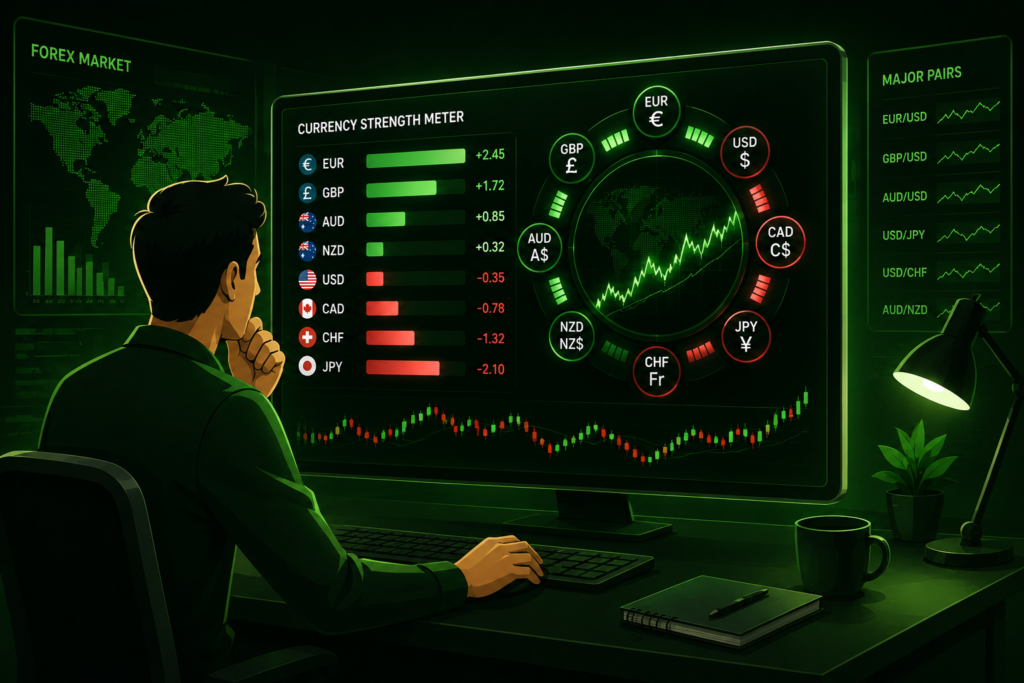
A trader checks the currency strength meter and sees:

  • USD is weak.
  • EUR is strong.
  • GBP is strong.
  • JPY is neutral.

The trader may decide to watch EUR/USD and GBP/USD.

Then the trader checks the charts.

If EUR/USD is trending higher and pulling back into support, the trader may wait for bullish confirmation.

If GBP/USD is also moving higher but is already extended, the trader may skip it.

This is a practical way to use currency strength.

The tool helps identify possible opportunities, but the trader still makes the final decision based on the full setup.

Currency Strength for Beginners

Beginner traders often feel overwhelmed because there are many forex pairs to watch.

A currency strength meter can make the process easier.

Instead of jumping randomly from chart to chart, beginners can focus on the currencies with the clearest strength difference.

This can help reduce confusion.

However, beginners should avoid depending on the tool too much.

It is still important to learn:

  • How forex pairs work
  • How trends form
  • How support and resistance work
  • How risk management works
  • How economic news affects currencies
  • How to control emotions while trading

A currency strength meter can support learning, but it does not replace education.

Currency Strength for Experienced Traders

Experienced traders may use currency strength in a more advanced way.

They may compare short-term strength with long-term trends.

They may look for divergence between price and currency strength.

They may use strength readings to confirm continuation trades or spot early reversal conditions.

They may also use currency strength to avoid correlated risk.

For example, if a trader opens multiple trades that all depend on US dollar weakness, they may be taking more risk than they realize.

Currency strength can help traders understand that exposure.

Can a Currency Strength Meter Improve Trading?

A currency strength meter can improve trading decisions if used correctly.

It can help traders:

  • Find better pairs
  • Avoid unclear markets
  • Confirm trade ideas
  • Understand broader currency movement
  • Build a more structured routine

But it cannot guarantee success.

The tool is only as useful as the trader’s process.

A trader with poor risk management can still lose money even when using good tools.

A trader with patience, structure, and discipline may use currency strength as a helpful part of a complete strategy.

START A DEMO ACCOUNT WITH INVIDIATRADE HERE

Final Thoughts

A currency strength meter is a useful forex trading tool because it helps traders compare currencies across the market.

It can show which currencies are strong, which are weak, and which pairs may deserve attention.

The best setups often happen when a strong currency is paired against a weak currency, but traders should still confirm everything on the chart.

Currency strength should be used with technical analysis, market structure, and risk management.

It should not be used as a standalone trading signal.

For traders who want a clearer way to read the forex market, a currency strength meter can be a valuable part of the trading process.

Disclaimer

Trading forex and CFDs involves risk and may not be suitable for all traders. Market conditions can change quickly, and losses can occur. InvidiaTrade does not provide financial advice and does not guarantee trading results. Any information in this article is for educational purposes only. Traders should do their own research, understand the risks involved, and only trade with funds they can afford to lose.

Currency Strength Meter

Currency Strength Meter: A Practical Guide for Forex Traders

June 1, 2026 No Comments

Table of Contents   What Is a Currency Strength Meter? A currency strength meter is a tool that helps forex traders measure the relative strength

Read More »
commodity prices today

Commodity Prices Today: What Traders Should Watch Before Entering the Market

May 26, 2026 No Comments

Table of Contents   Introduction Commodity prices today are more than numbers on a screen. They can show pressure in the global economy. They can

Read More »
Autopilot App

Autopilot App: How Trading Automation Can Support Smarter Market Decisions

May 19, 2026 No Comments

Introduction An autopilot app is becoming a popular idea among traders who want a simpler way to interact with the market. Many people are interested

Read More »
AI Trading Bot

AI Trading Bot: What Traders Should Know Before Using Automated Forex Tools

May 13, 2026 No Comments

Table of Contents   The forex market moves fast. Prices change every second. Traders often need to watch charts, follow news, manage risk, and make

Read More »
masterbot live chart

MasterBOT Live Chart: How to Read BOT Price Trends and Market Signals

May 4, 2026 No Comments

The MasterBOT live chart is useful for anyone who wants to track BOT price movement in real time. Instead of looking only at the current

Read More »
Trading vs Investing Accounts

Trading vs Investing Accounts: Key Differences Every Market Participant Should Know

April 29, 2026 No Comments

Introduction Trading vs Investing Accounts is one of the most important comparisons for anyone entering the financial markets. Many beginners think that opening an account

Read More »
Post Tags :
  • automated eas
  • best trading platform
  • blog.invidiatrade.com
  • broker
  • demo account
  • Expert Advisors
  • forex broker
  • Forex Pairs
  • forex trading
  • metatrader 5
  • mt4
  • mt5
  • trading gold
  • trading platform
Articles
img
Currency Strength Meter: A Practical Guide
June 1, 2026
img
Commodity Prices Today: What Traders Should
May 26, 2026
img
Autopilot App: How Trading Automation Can
May 19, 2026
img
AI Trading Bot: What Traders Should
May 13, 2026
img
MasterBOT Live Chart: How to Read
May 4, 2026
Categories
  • Beginner Basics (45)
  • Case Studies & Backtests (34)
  • Central Bank Updates (4)
  • Commodities Outlook (6)
  • Crypto (3)
  • Currency Strength & Correlation (37)
  • Dividend stocks (3)
  • EA & Automation (25)
  • EA Case Studies (16)
  • Economic Reports (6)
  • European & Asian Markets (6)
  • Forex (4)
  • Forex Strategies (40)
  • Forex Trading (92)
  • Fundamental Analysis (18)
  • Geopolitical Events (1)
  • Gold & Commodities (23)
  • Indicators & Charting (6)
  • Indices & Stocks (27)
  • IPO stocks (4)
  • Major Pairs (21)
  • Market News & Analysis (47)
  • Market Sentiment (12)
  • Minor & Exotic Pairs (19)
  • Non-dividend stocks (1)
  • Oil & Energy (5)
  • Performance Data (8)
  • Platforms & Brokers (7)
  • Recaps & Performance Reviews (2)
  • Risk Management (15)
  • Stock Trading Tips (8)
  • Strategy Backtests (9)
  • Technical Analysis (18)
  • Trade Setups (3)
  • Trading (27)
  • Trading Education (61)
  • Trading Psychology (11)
  • Trading Tools & Tips (42)
  • Uncategorized (18)
  • US Markets (13)
  • Value stocks (2)
  • Weekly Forex Outlook (1)
  • Weekly Outlooks & Setups (11)
  • XAU/USD Insights (10)
invidiatrade Trade & Invest The Smart Way

support@invidiatrade.com
Traders :
  • Account types
  • PAMM accounts
  • Pairs & Stocks
Platforms:
  • Metatrader 5 | MT5
Company :
  • About
  • IB Program
  • Blogs
  • Support
Registered Address :

Robin Kelton Bldg, Choc Bay, Castries, Saint Lucia

Physical Address :

Diagonal 68 11A-38, Bogotá, Bogotá, Colombia

Terms and Condition Risk Disclosure

InvidiaTrade is operated by INVIDIATRADE LTD, an international broker offering access to Contracts for Difference (CFDs). INVIDIATRADE LTD is registered in Saint Lucia under license number 2025-00594, with its registered address at Robin Kelton Bldg, Choc Bay, Castries, Saint Lucia.

INVIDIATRADE LTD also maintains a physical operations office located at Diagonal 68 11A-38, Bogotá, Bogotá, Colombia.

INVIDIATRADE LTD is the parent company and shareholder of THE MODERN PRIME (PTY) LTD, a separately incorporated South African entity authorized and regulated by the Financial Sector Conduct Authority (FSCA) as a Financial Services Provider under license number 54865.

Certain non-brokerage services, including technology, administrative, and operational support functions, may be provided by affiliated entities, including THE MODERN PRIME (PTY) LTD.

Risk Warning: Trading CFDs involves a high level of risk and may not be suitable for all investors. You should carefully consider your investment objectives, level of experience, and risk appetite before trading. Losses may exceed your initial investment. We do not provide investment advice and nothing on this website should be construed as such. You should not risk more than you are prepared to lose. Please review our Terms & Conditions and Risk Disclosure for further details.

This website is not directed at or intended to solicit citizens and/or residents of the United States, and is not intended for distribution to or use by any person in any jurisdiction where such distribution or use would be contrary to local law or regulation.